Information and Communication Infrastructure
+Intelligent IoT Network
Aiming for a New Information and
Communication Society
with Energy and Environmental Issues in Mind!
Wireless Power TransferMultipath TCPIntelligent IoT NetworkHigh-Frequency Power Supply Circuits
Aiming for a New Information and Communication Society
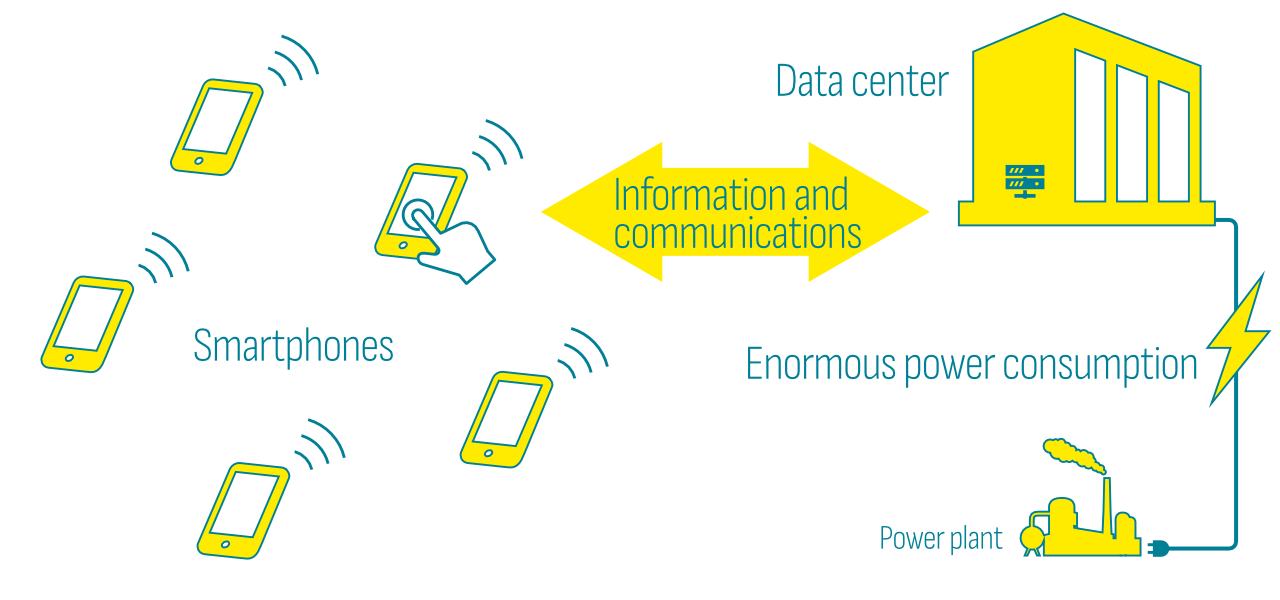
With the increasing performance of computers and the development of information and communication technologies, our information infrastructure has been built up at an astonishing pace. However, supporting it requires a tremendous amount of electric power.
Even if we are not aware of it, every time we tap once on a smartphone, a considerable amount of electricity is consumed at data centers (server facilities). It is even said that, at the data centers of giant information companies such as GAFA, information and communication and information processing consume as much electricity as a large power plant.
In addition, for the electricity generated at a power station to reach people, it must pass through multiple power-supply circuits, and some of that electricity is consumed in those circuits as well.
In our laboratory, we are developing power-circuit design software that reduces energy loss, and by accelerating the development of high-performance power circuits, we are advancing research toward solving energy and environmental problems.
Enabling Charging Outdoors Where There Are No Outlets
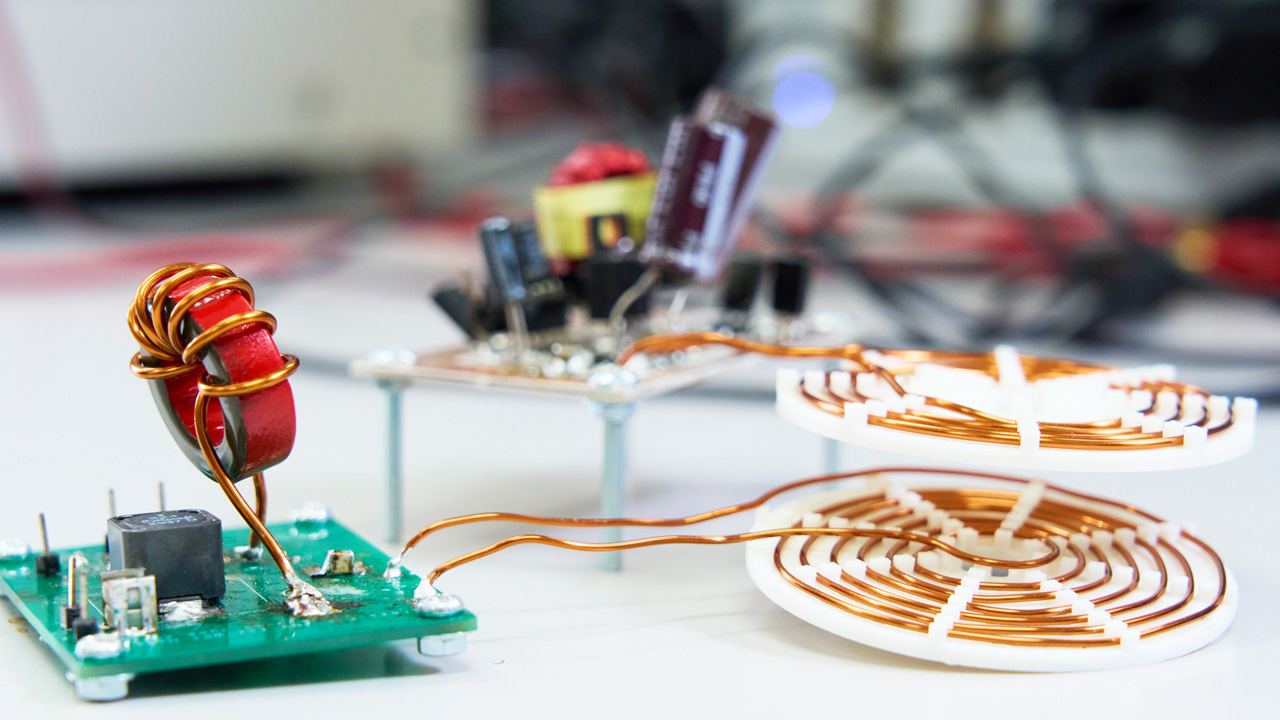
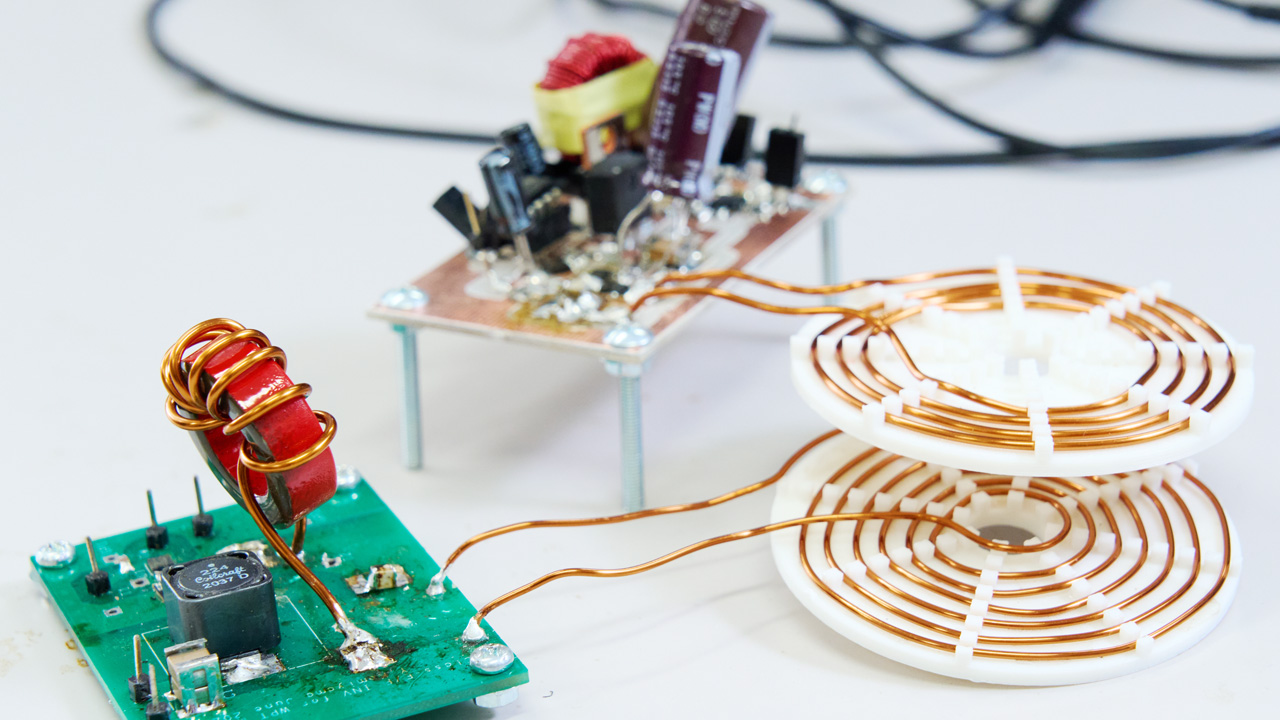
The wireless power transfer technology used for “place-and-charge” applications such as smartphones and wireless earphones is also one of our research themes.
IoT devices such as sensors installed in places that are usually out of sight or out of reach can be costly to retrieve and recharge when their batteries run out. As a result, in some cases they are treated as disposable devices, which becomes an issue from the standpoint of environmental conservation.
However, if, for example, a drone could land above a sensor buried in the soil and charge it, that sensor could be used semi-permanently.
If this research progresses further, a society may arrive in which electric vehicles can be automatically charged from circuits installed in roads and parking lots. Doesn’t that future sound exciting—made possible by electric circuits?
Reducing Power Consumption Through the “Local Production for Local Consumption” of Information
IoT (Internet of Things) is a technology that makes the automatic and continuous collection of enormous amounts of data simple and inexpensive by networking a wide variety of sensors through wireless communication.
For example, gas meters in your homes are equipped with sensors that detect gas usage, and that information is automatically transmitted to a data center. The collected data are aggregated and billing information is sent to each household. During this process, a large-scale information and communication system is used, and computer processing is carried out at server centers; as described above, a vast amount of energy is consumed.
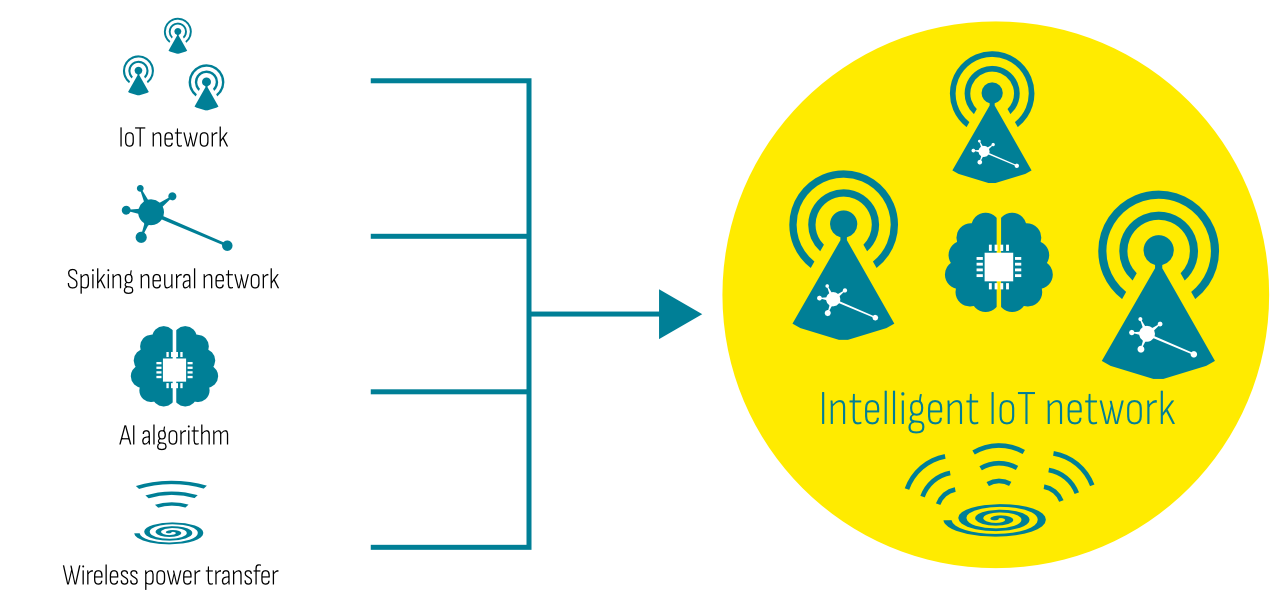
What we are considering, therefore, is a technology called an “Intelligent IoT Network*,” in which AI is built into the IoT sensor network itself. Because information processing can be carried out within the network for information collection, servers become unnecessary, and it is expected to lead to a major reduction in power consumption.
Tips
Intelligent IoT Network
A mechanism that equips the IoT network itself—connecting devices such as home appliances and sensors—with AI functions, and processes information without connecting to servers. By enabling the “local production for local consumption” of information, the burden on server facilities can be greatly reduced.
Profile
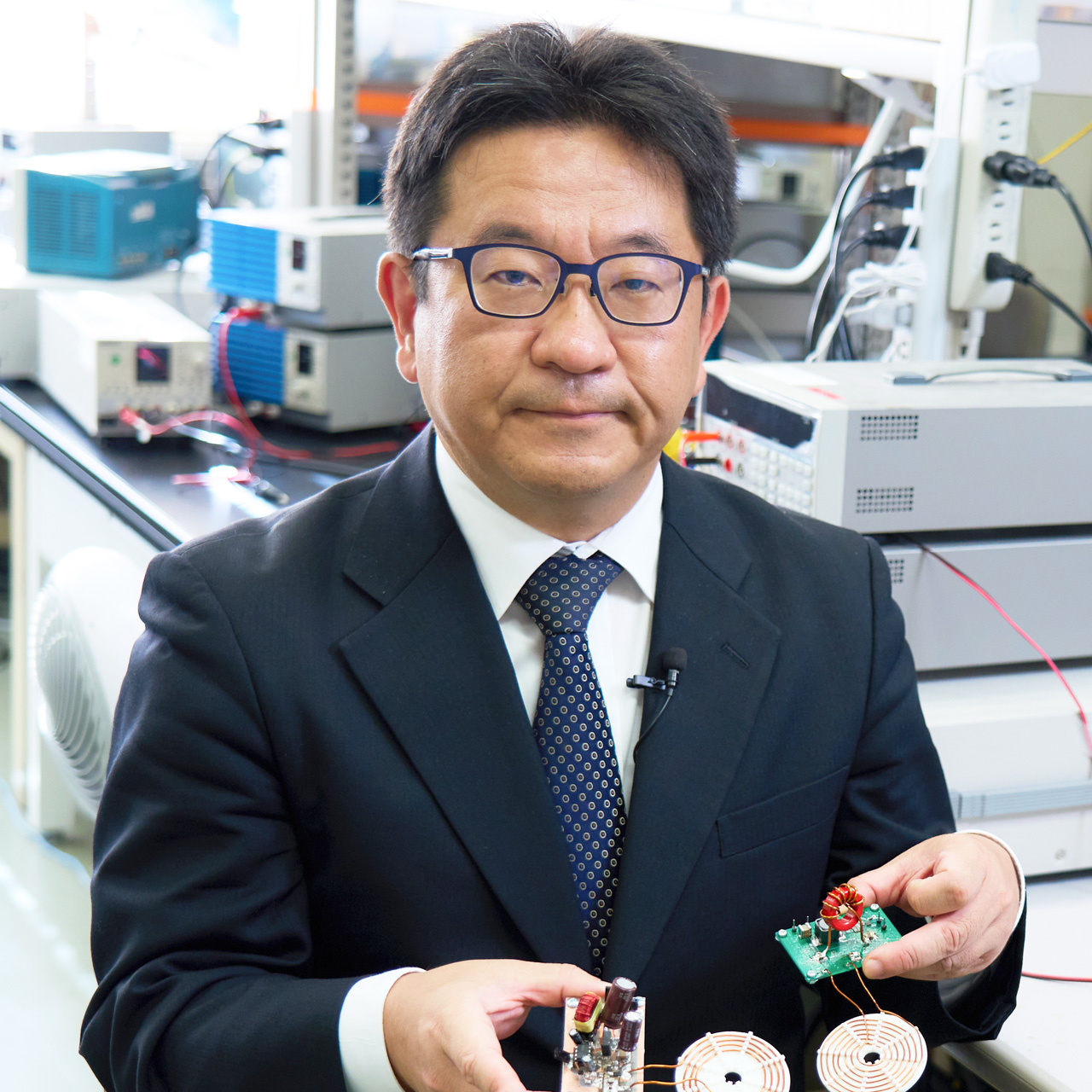
Prof. Hiroo SEKIYA
Professor, Graduate School of Informatics / Faculty of Informatics, Chiba University. He graduated from the Department of Electrical Engineering, Faculty of Science and Technology, Keio University in 1996, and completed the doctoral program in Electrical Engineering, Graduate School of Science and Technology, Keio University in 2001. After serving as an Assistant at the Graduate School of Science and Technology, Chiba University, a Visiting Researcher at Wright State University (JSPS Overseas Research Fellowships), and other positions, he became Professor at the Graduate School of Engineering, Chiba University. He has been in his current position since 2024. Ph.D. (Engineering).

View Another Research
Improving AI Accuracy and Nurturing It into a Trustworthy Partner
Assoc. Prof. Hiroshi KERA
Developing a Camera That Can Capture What Cannot Be Seen
Assoc. Prof. Hiroyuki KUBO
Eliminating Damage from Torrential Rain Through Meteorological Data Science!
Prof. Shunji KOTSUKI
Using Human Data to Support Longer, Healthier Lives
Prof. Ryoko KATAGIRI
How Far Will AI Evolve in Distinguishing Dogs from Cats?
Prof. Kazuhiko KAWAMOTO
Aiming for a New Information and Communication Society with Energy and Environmental Issues in Mind!
Prof. Hiroo SEKIYA