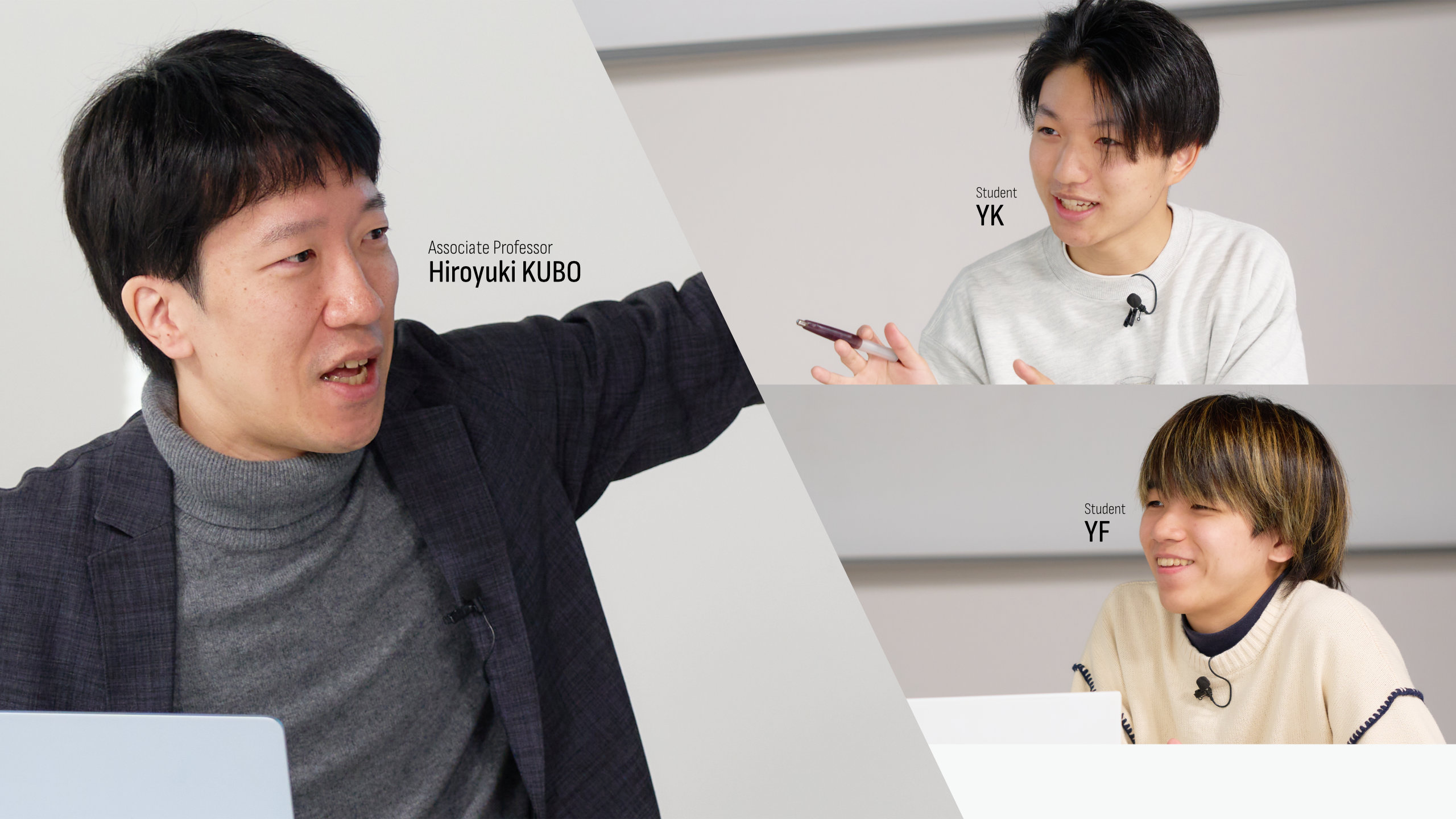
Students+Assoc. Prof. Hiroyuki KUBO
Expanding the Possibilities of AI
Through “Visualization”
— A Future Opened by Light and Information
KUBO
“I want to make AI a better partner for humans through computer vision that lets us “see” what is invisible.”Student YK
“I’m a total game geek, so I’m really excited to hear about image-related topics.”Student YF
“I want to learn hints about how AI can be used to solve social issues.”
“Seeing” What We Cannot See?
QYK: Your research focuses on technologies that capture what is invisible. What does this mean in practice?
AKUBO: For example, we can visualize things like blood vessels beneath the skin—which you cannot see with the naked eye—or differences in liquids that look the same on the surface (for example, milk vs. liquid soap) by capturing differences in their composition. This is technology that “visualizes an invisible world.”
We project light onto the subject and then record the reflected light from specific angles. That enables us to selectively capture the light reflected from blood vessels and turn it into an image. In the case of milk and liquid soap, the way light is transmitted and scattered inside the liquid differs depending on composition, and we can capture that difference as an image.
If we train AI on such images, we could build systems that distinguish “milk” from “liquid soap,” and that might be used, for example, for quality control on production lines.
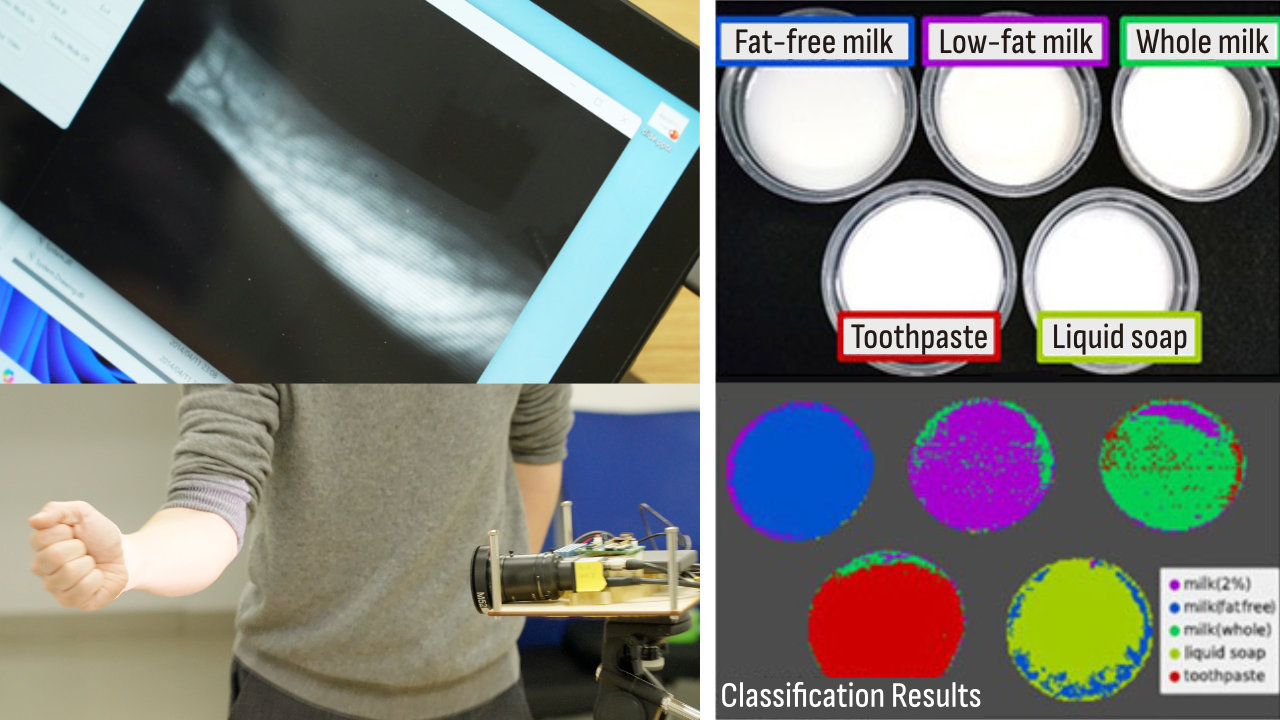
By projecting light onto the subject and capturing the reflected light from a unique angle, the system selectively extracts only the light reflected from blood vessels and converts it into an image. As a result, blood vessels that are invisible to the naked eye become clearly visible (left). It can also distinguish the composition of “white liquids” that the human eye cannot tell apart (right).
“Good Data” Makes AI Smarter
QYF: When we talk about imaging internal information, there are already X-rays and MRI. In the AI era, what is the value of your “invisible imaging” technology?
AKUBO: My research belongs to a field called computer vision*, but I place particular emphasis on the “entrance” to AI—how we collect data. For example, X-rays carry radiation risk, and MRI or CT scanners require large and expensive equipment. In contrast, our system can be built at low cost using commercially available projectors and cameras, and it is portable. I believe it could be useful not only in medical settings, but also in emergency care at disaster sites or in health management at home.
AI learns from large amounts of data and produces answers that seem correct. But if the data is poor, it will not reach correct answers. If we develop technologies that allow AI to “see” invisible information, we can further improve the accuracy of AI learning.
Tips
Computer Vision
A technology that enables computers to “see” by recognizing, understanding, and analyzing information from images and videos—similar to human visual perception. It is used in many fields, including face recognition, autonomous driving, and product inspection.
Will AI Take People’s Jobs?
QYK: People say that as AI progresses, it will take more and more human jobs. Is that true?
AKUBO: I think there is some truth to that. But more precisely, the way we work—and the quality of work—will change. I am collaborating with an animation studio on research to improve efficiency in animation production using AI.
Even if we try to leave the coloring of line drawings entirely to AI—a task that requires enormous effort for humans—we found it is difficult to reach 100% accuracy. Instead, we see potential in a workflow where AI narrows down color candidates in advance, and humans choose the correct one. That could achieve both high accuracy and high efficiency.
What Does It Take to Become Someone Who Uses AI Well?
QYF: To live in the AI era, what abilities should we develop?
AKUBO: To use AI well, you need broad foundations—physics, mathematics, optics, programming, English, and more. You also need the ability to judge what to research and which information to trust. If you do not understand the mathematical and physical assumptions behind a system, you cannot judge whether an AI’s answer is correct.
What you learn in the Faculty of Informatics becomes the foundation for being that kind of person. AI can return answers when you ask, but deciding “what to ask” is something humans must do.
After the Dialogue
Develop the Ability to Notice What Is Invisible and Make Judgments
KUBO: AI is receiving a lot of attention, but what matters is not AI itself—it is how we use it and what we ask it to judge. The world is far more complex than we imagine, and we cannot automate everything. That is exactly why there is room for humans to think, formulate questions, and cooperate with AI. Through your studies at university, I hope you will develop the ability to notice what is invisible and make sound judgments.
I Want to Deliver Happiness to the World Through Data Science!
YK: I encountered programming in high school, and I chose this faculty because I felt it would let me face social issues through “comprehensive knowledge.” Prof. Kubo’s story about “visualizing what is invisible” felt like the power to see the essence of a problem itself. Someday, I want to get closer to my dream—“delivering happiness to the world”—through data science.
A Chance for a Game Geek Like Me to Contribute to Society!
YF: I’ve loved games since I was little, and I’ve also experienced programming and game development. Prof. Kubo’s talk made it click for me that AI becomes smarter depending on “what and how you capture” (the input). I want to sharpen my data science and algorithms, and develop game × AI into technologies that contribute to society.
Associate Professor
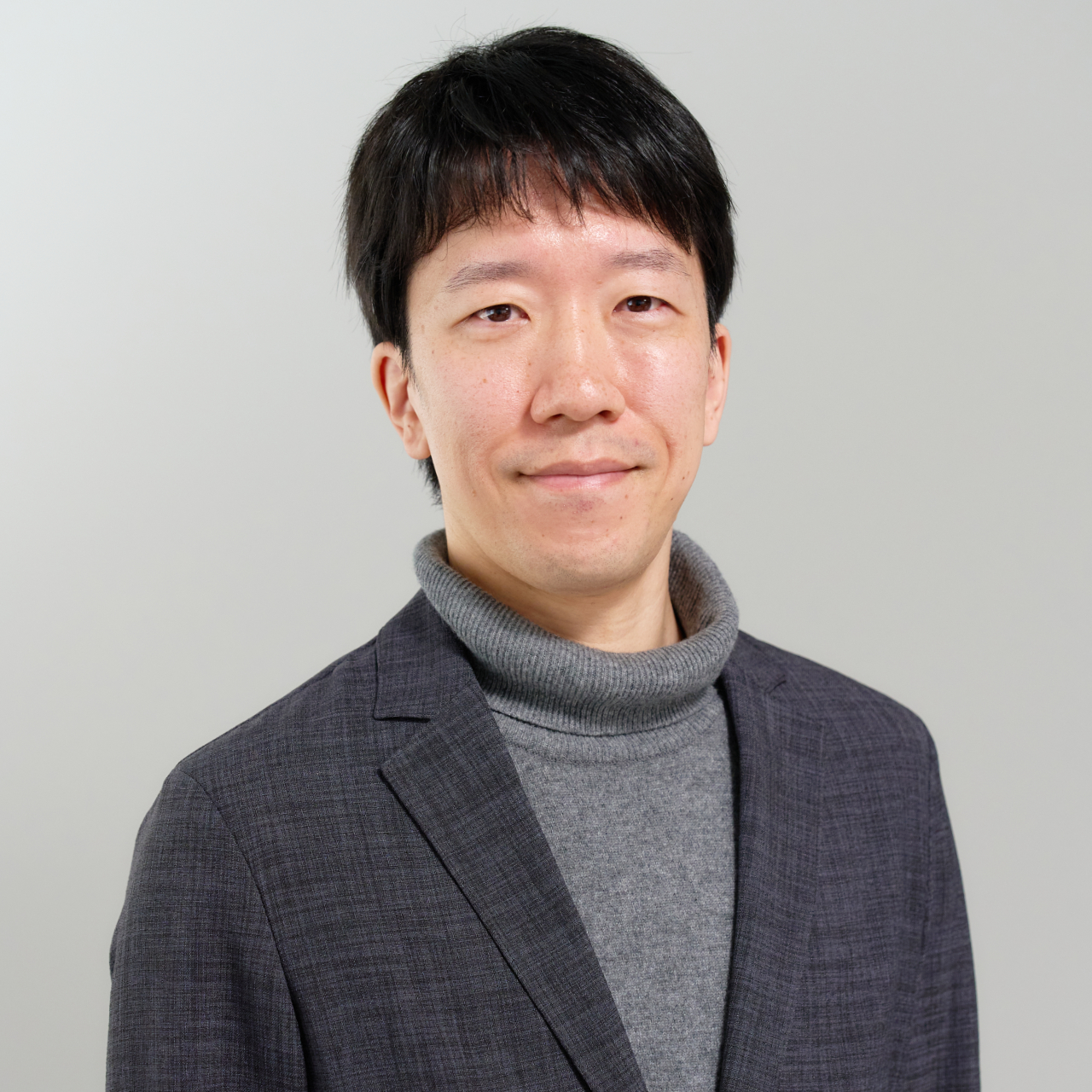
Assoc. Prof. Hiroyuki KUBO
Associate Professor, Faculty of Informatics / Graduate School of Informatics, Chiba University. He received a Ph.D. (Engineering) from Waseda University in 2012. After working at Canon Inc., serving at the Nara Institute of Science and Technology, and holding positions such as a Visiting Researcher at the Carnegie Mellon University Robotics Institute and a Specially Appointed Lecturer at Tokai University, he joined Chiba University in 2022.
Student
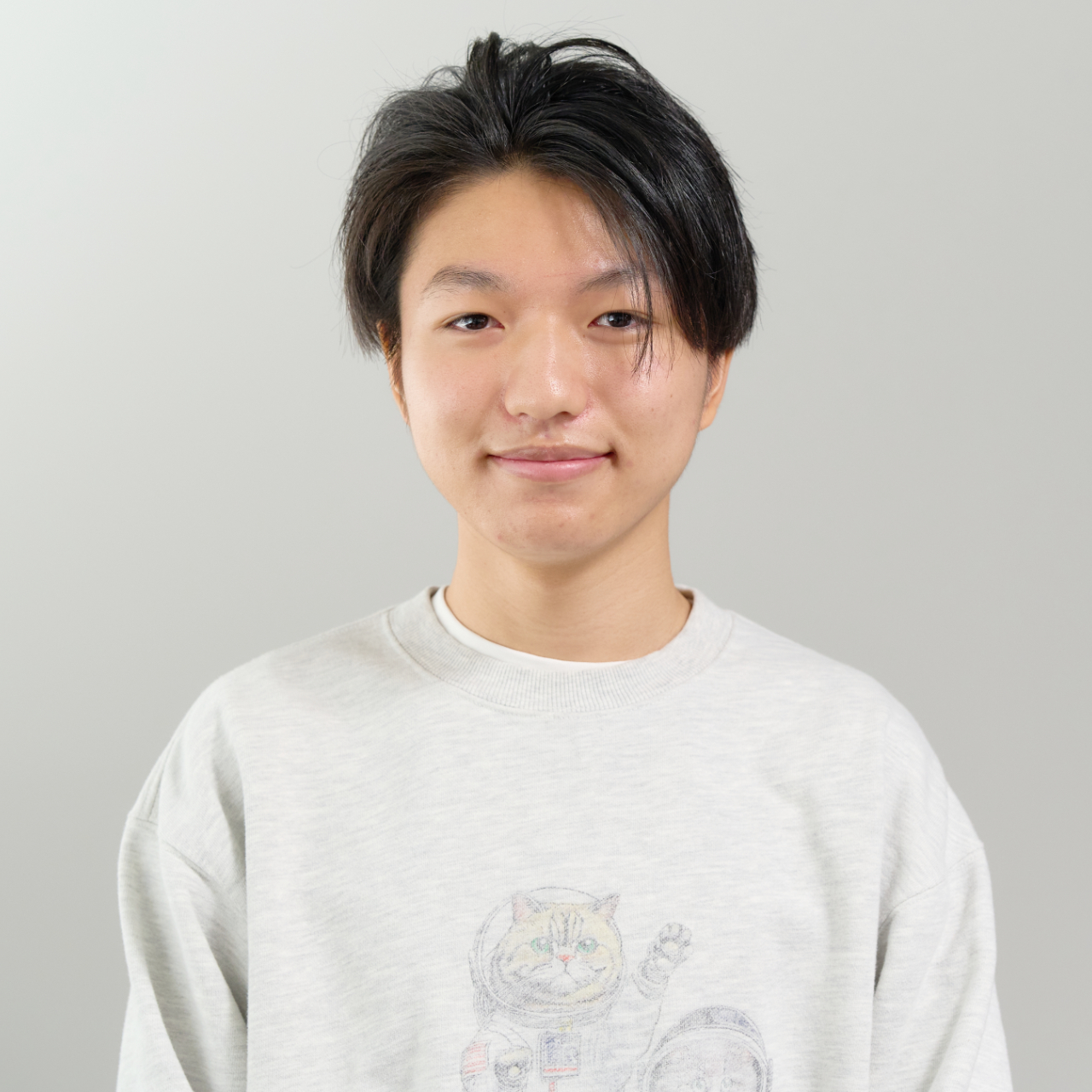
Student
YK
High School: Hokurei High School (Hokkaido)
I chose Chiba University because it perfectly matched what I wanted to do at university. I’m also good at presenting myself, so I felt confident (maybe a little too confident!) that I could get in through the application-based admission route.
Student
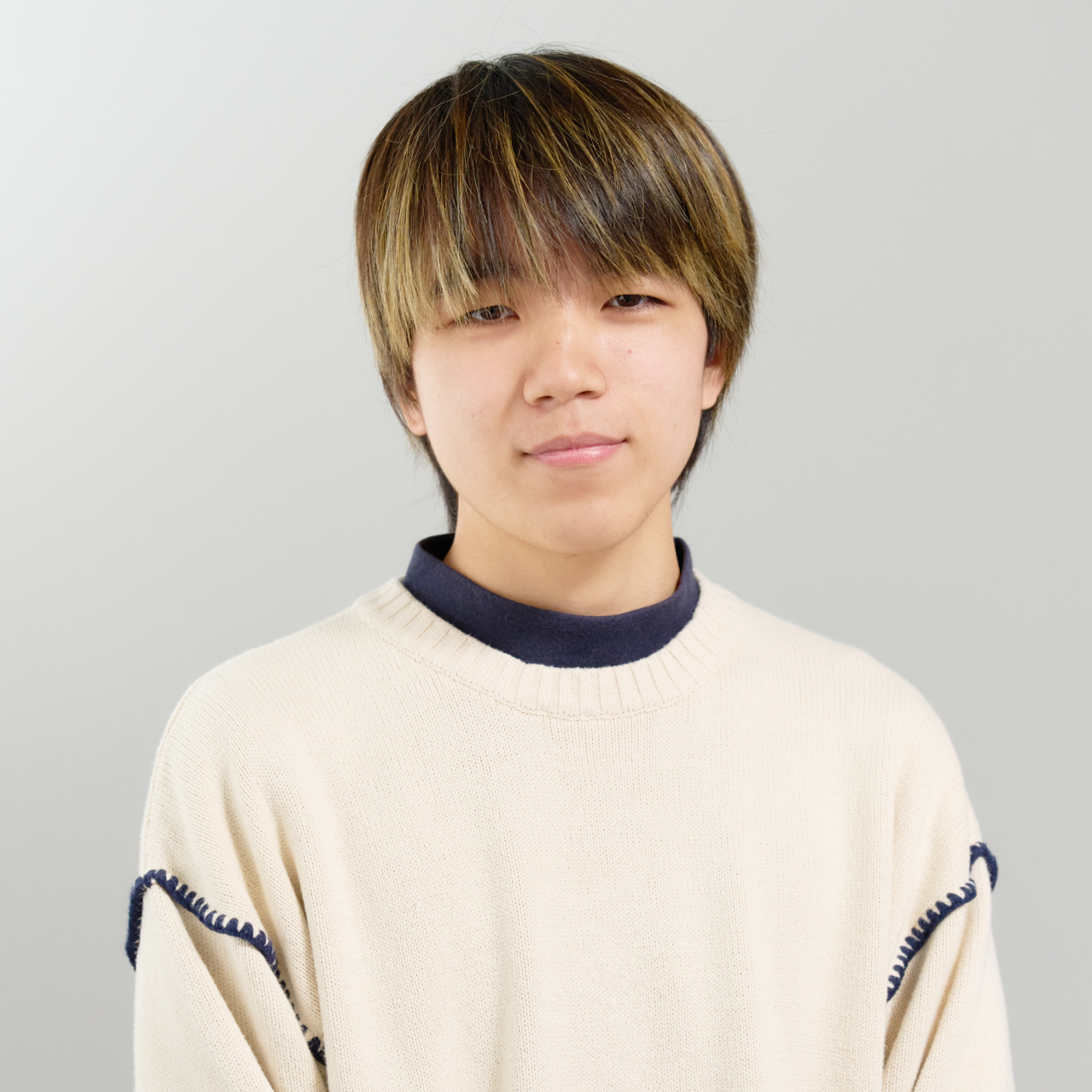
Student
YF
High School: Funabashi Keimei High School (Chiba)
I’ve loved games since childhood, and I explore technologies that can benefit society through programming and data science. I’m involved in four clubs—Photography, CCS, the Chess Club, and the Light Music Club—which has broadened my range of creativity, thinking, and expression. I hope to pursue research that connects entertainment and AI in ways that contribute to society.

View Another Dialogue
Seizing Opportunities in the AI Era
— Expanding Futures through Information Engineering and Data ScienceStudents╳Dean Shigeo SHIODA
How Is the World Humans See Different from the World AI Sees?
— Thinking Skills Open the FutureStudents╳Assoc. Prof. Hiroshi KERA
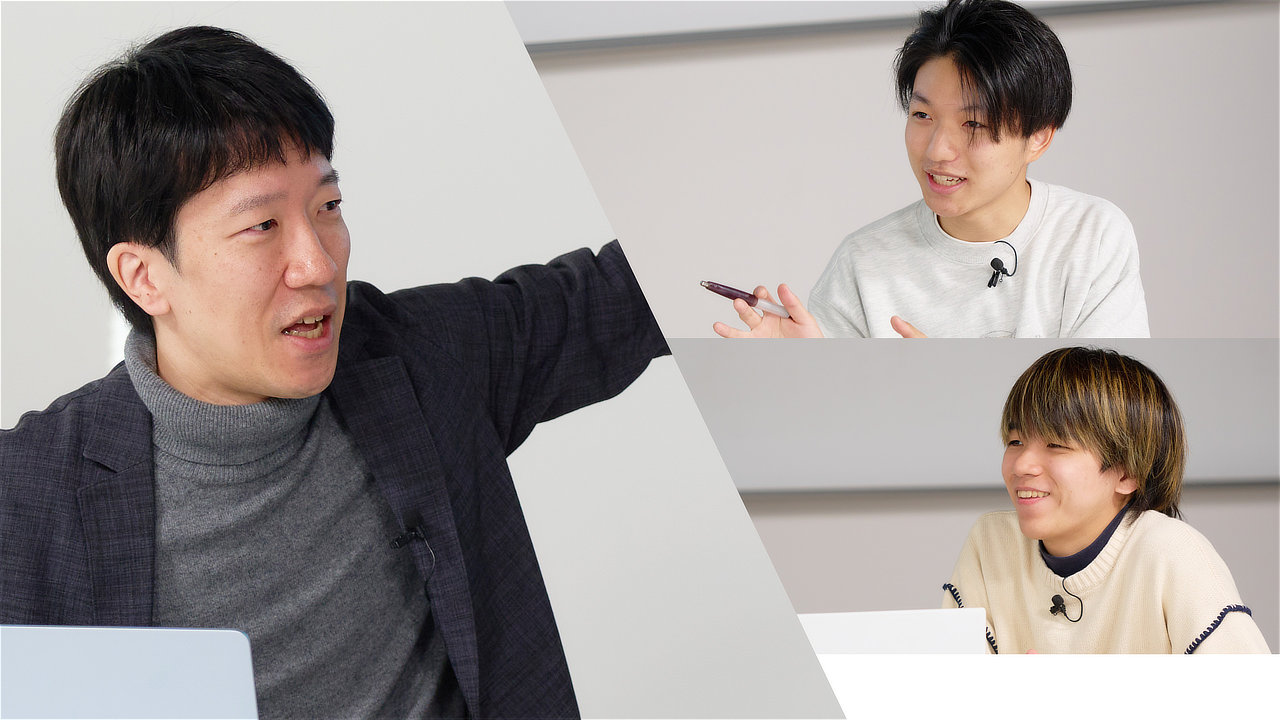
Expanding the Possibilities of AI Through “Visualization”
— Thinking Skills Open the FutureStudents╳Assoc. Prof. Hiroyuki KUBO