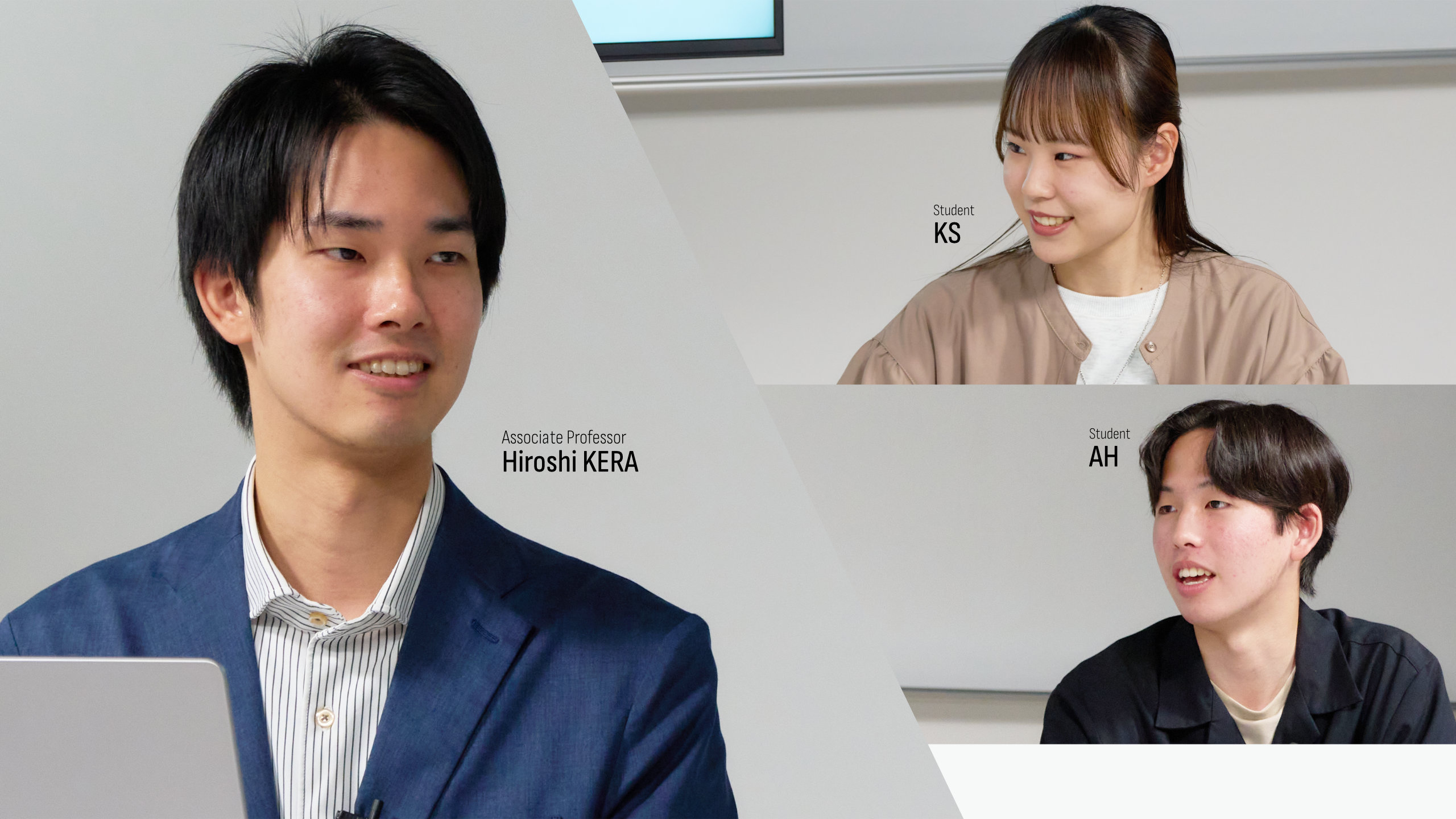
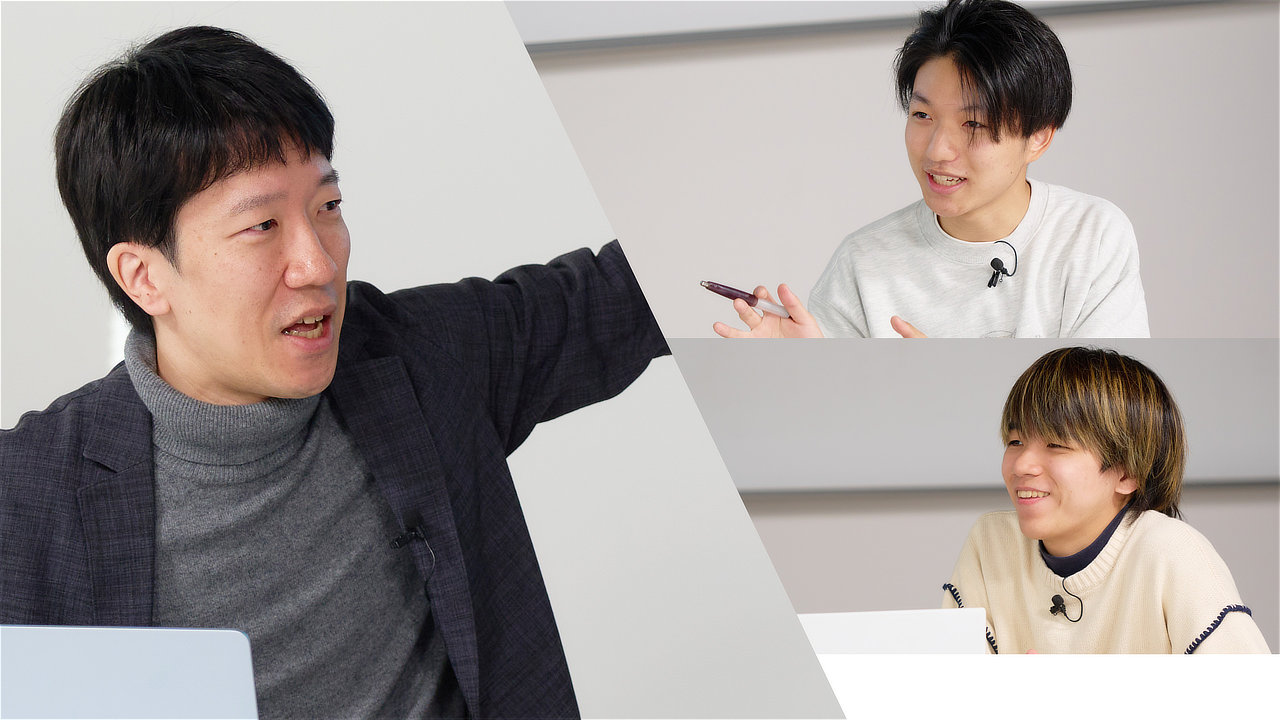
Students+Assoc. Prof. Hiroshi KERA
How Is the World Humans See Different
from the World AI Sees?
— Thinking Skills Open the Future
KERA
“AI is a technology that tries to reproduce human ways of thinking on computers. Even if it looks intelligent, it is not thinking in the same way humans do.”Student KS
“I use AI casually every day, but how does it actually work?”Student AH
“As AI progresses, will the day come when it surpasses humans?”
What Is AI?
QKS: I’ve heard that your research specializes in machine learning. When people casually say “AI does…,” but what is AI in the first place?
AKERA: In short, it is a technology that tries to reproduce “how humans think” on computers. When humans receive information, we refer to past experiences and knowledge in our minds, infer what it means, and make decisions. AI is a mechanism that tries to realize that relationship between input and output in a computational way.
For example, if you show it an image that looks ambiguous—dog or cat—it can often distinguish correctly. AI has become quite capable, and it can return answers that humans want with high accuracy. Behind this is the development of machine learning. Humans also infer and judge from imperfect information, right? The ability to make judgments even when information is incomplete is something that overlaps with human thinking, and that is one reason the term “artificial intelligence” feels more real today.
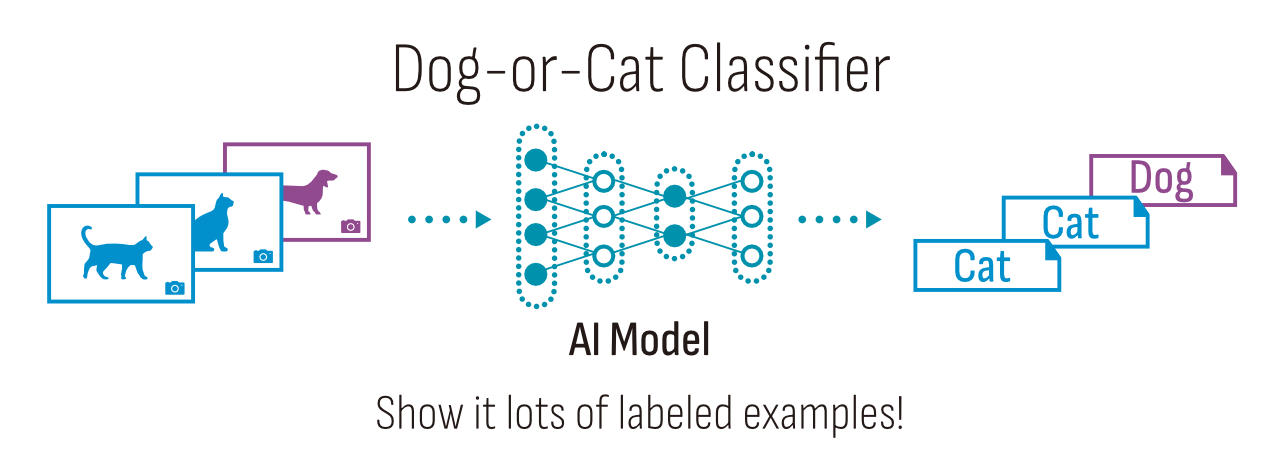
AI is a technique that feeds computers large amounts of data, lets them learn patterns and rules, and enables them to predict answers for new, unseen data. For example, by showing many labeled photos of dogs and cats, we can train an AI that can classify them.
Why Did Generative AI Suddenly Become So Smart?
QAH: Why did generative AI such as ChatGPT develop so rapidly?
AKERA: People sometimes say this field makes a major leap about every ten years. Roughly ten years after deep learning became widespread, generative AI broke through around 2022–2023. Deep learning uses a neural-network structure inspired by the brain. It feeds in large amounts of data and learns by reducing the “error” between predictions and correct answers.
More recently, a breakthrough model called the Transformer* made it possible to handle data whose length varies—like natural language. That contributed to a dramatic jump in performance.
Tips
Transformer
A deep learning architecture introduced by Google researchers in 2017. It dramatically improved the accuracy and speed of processing natural language. Transformers are a core technology behind today’s generative AI models, including ChatGPT and Gemini.
Will AI Surpass Humans?
QKS: Will the “singularity,” where AI surpasses humans, ever occur?
AKERA: I get that question a lot (laughs). I don’t know whether AI will surpass humans completely, but I do think AI will surpass humans in some aspects of intellectual ability. However, human intellectual activity also includes things like emotions and values. Whether people will accept or follow an AI’s judgment is a separate issue.
My own sense is that AI is like an “alien.” Even if it can perform human-like intellectual tasks, its process includes unknown territory, and with slightly unusual inputs it can behave in unexpected ways. We need to understand that and engage with AI while also thinking about societal issues and ethics.
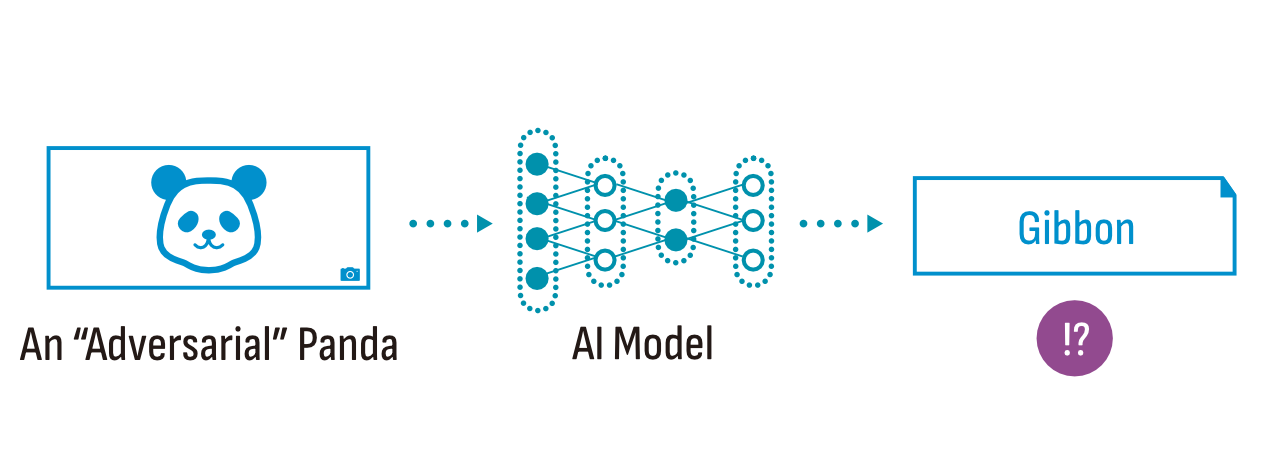
Some images look like a panda to humans, but an AI may misclassify them as a “gibbon.” AI can be like an “alien”: it interprets the world in ways that differ from humans. Understanding these differences—and exploring how to use them—is also an important research area.
How Should We Live in the AI Era?
QAH: Will AI change how we live? And how can we use what we learn in this faculty?
AKERA: How we live with AI in the future is something you will shape yourselves. As AI can replace more tasks, people will be able to challenge new things again. In that context, what matters is “what is human.”
What you learn in the Faculty of Informatics—mathematics at the core of AI, how to handle data, and other fundamentals—connects to any field. AI will enter engineering, healthcare, agriculture, and much more. So wherever you specialize, I believe what you learn here will be useful.
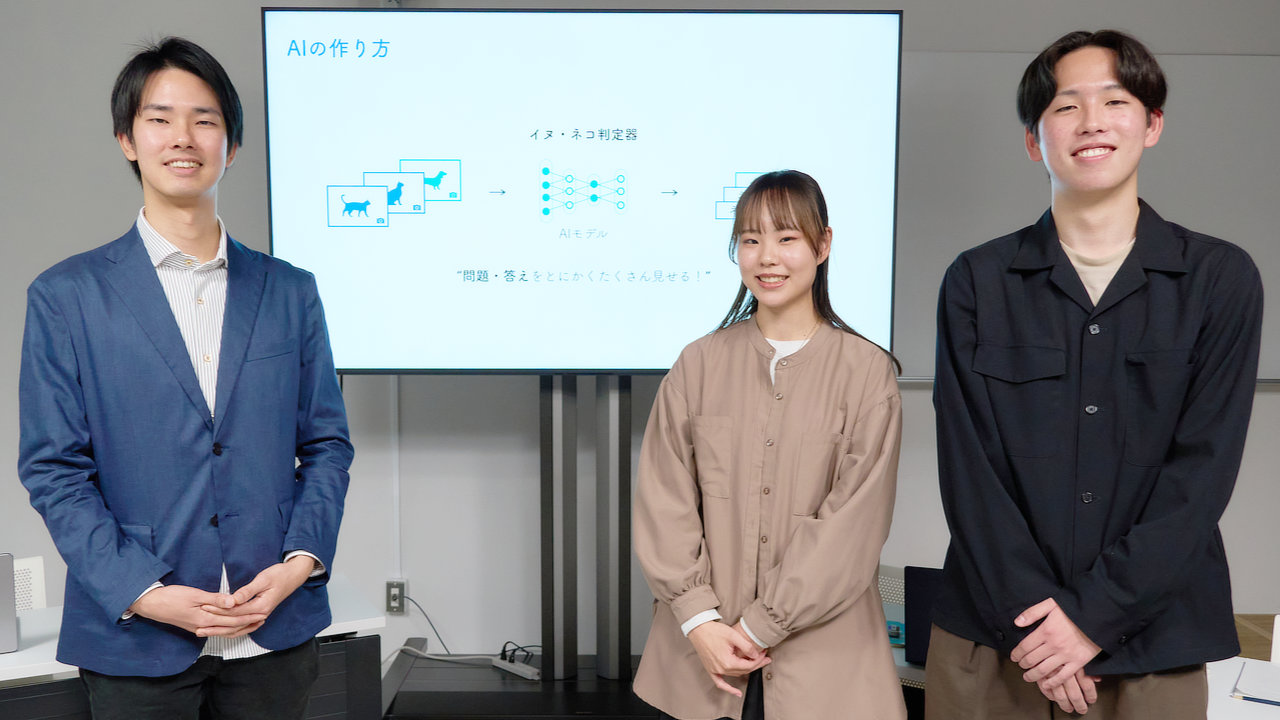
After the Dialogue
Value Your Own Questions
KERA: AI is evolving rapidly, but it is not a magical being. It thinks through mechanisms different from humans, and sometimes makes surprising judgments. That is exactly why it is important to understand AI correctly and engage with it based on its characteristics. Learning AI is also a way of thinking about human intelligence and how society should be. I hope you will value your own questions and think about the future together with AI.
I Want to Enrich People’s Lives and Experiences Through AI and Information
KS: Some people view the development of AI with anxiety, but I felt that if people focus on what AI cannot do and develop their own strengths, the world can become more interesting than it is now. Building on what I learn in mathematics and in image/audio fields, I want to connect that foundation to a career where I enrich people’s lives and experiences through AI and information.
I Want to Combine Multiple Specialties with AI and Contribute to Japan’s Future
AH: During university I want to broaden my interests, combine multiple areas of expertise with AI, and contribute to Japan’s future. I’m especially interested in logistics, and I want to reduce waste in “movement” through data analysis. Today’s dialogue made me realize that the more we use AI, the more important it is to formulate good questions.
Associate Professor
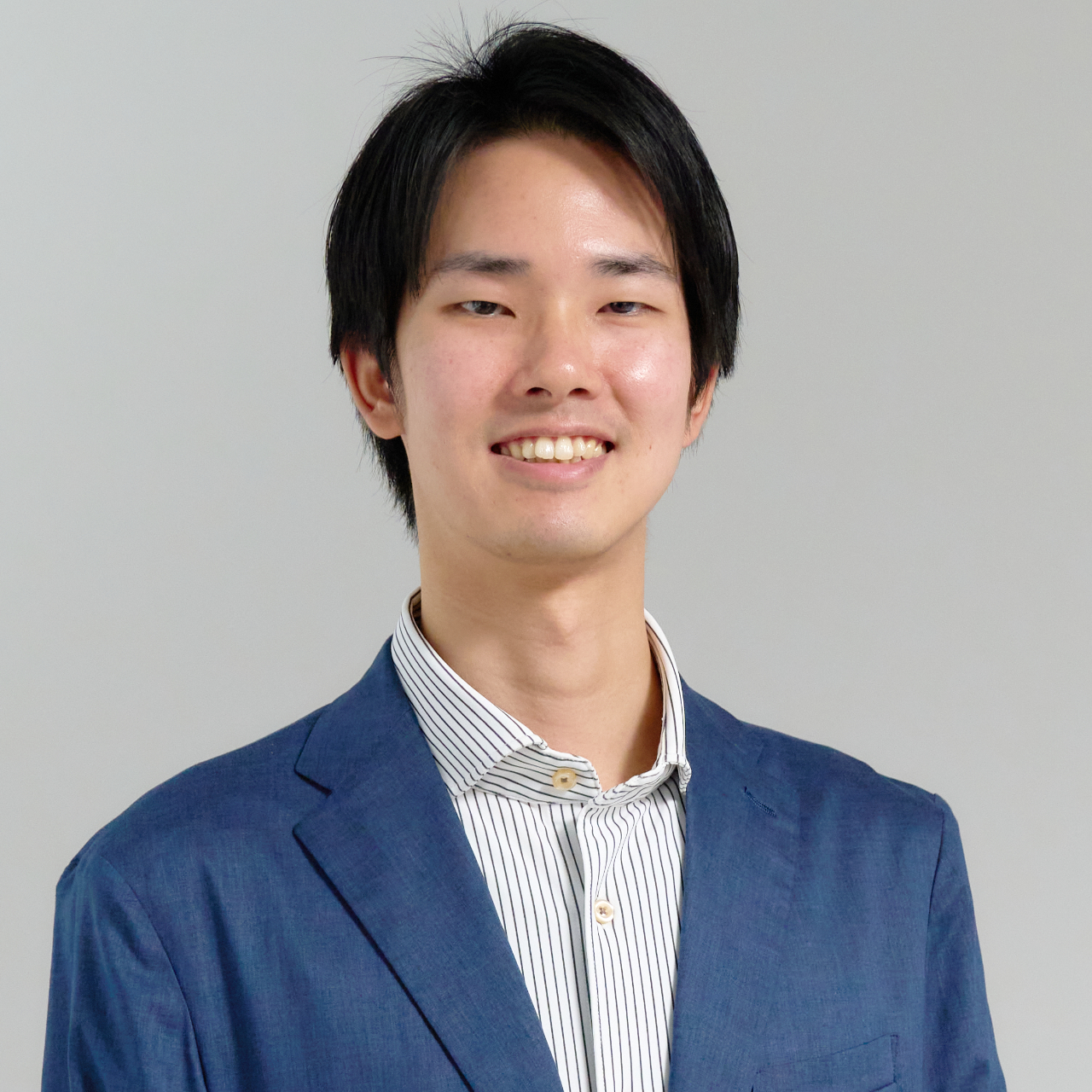
Assoc. Prof. Hiroshi KERA
Associate Professor, Faculty of Informatics / Graduate School of Informatics, Chiba University. He completed the doctoral program in Information & Communication Engineering at The University of Tokyo in 2020. He then served as a Project Researcher at the Graduate School of Information Science and Technology, The University of Tokyo, an Assistant Professor at the Graduate School of Informatics, Chiba University, and a Visiting Researcher at Zuse Institute Berlin, before assuming his current position in 2025.
Student

Student
KS
High School: Kindai University Toyooka High School (Hyogo)
Some people are worried about how rapidly AI is advancing. But I believe that if we focus on what AI cannot do—and keep developing our own abilities—the world will become even more interesting than it is today.
Student
Student
AH
High School: Komatsugawa High School (Tokyo)
If you find yourself analyzing what insights you can draw whenever you see tables and graphs, this field is for you. Analyze Chiba University’s entrance exam trends wisely, get admitted, and let’s study data science together!

View Another Dialogue
Seizing Opportunities in the AI Era
— Expanding Futures through Information Engineering and Data ScienceStudents╳Dean Shigeo SHIODA
How Is the World Humans See Different from the World AI Sees?
— Thinking Skills Open the FutureStudents╳Assoc. Prof. Hiroshi KERA
Expanding the Possibilities of AI Through “Visualization”
— Thinking Skills Open the FutureStudents╳Assoc. Prof. Hiroyuki KUBO