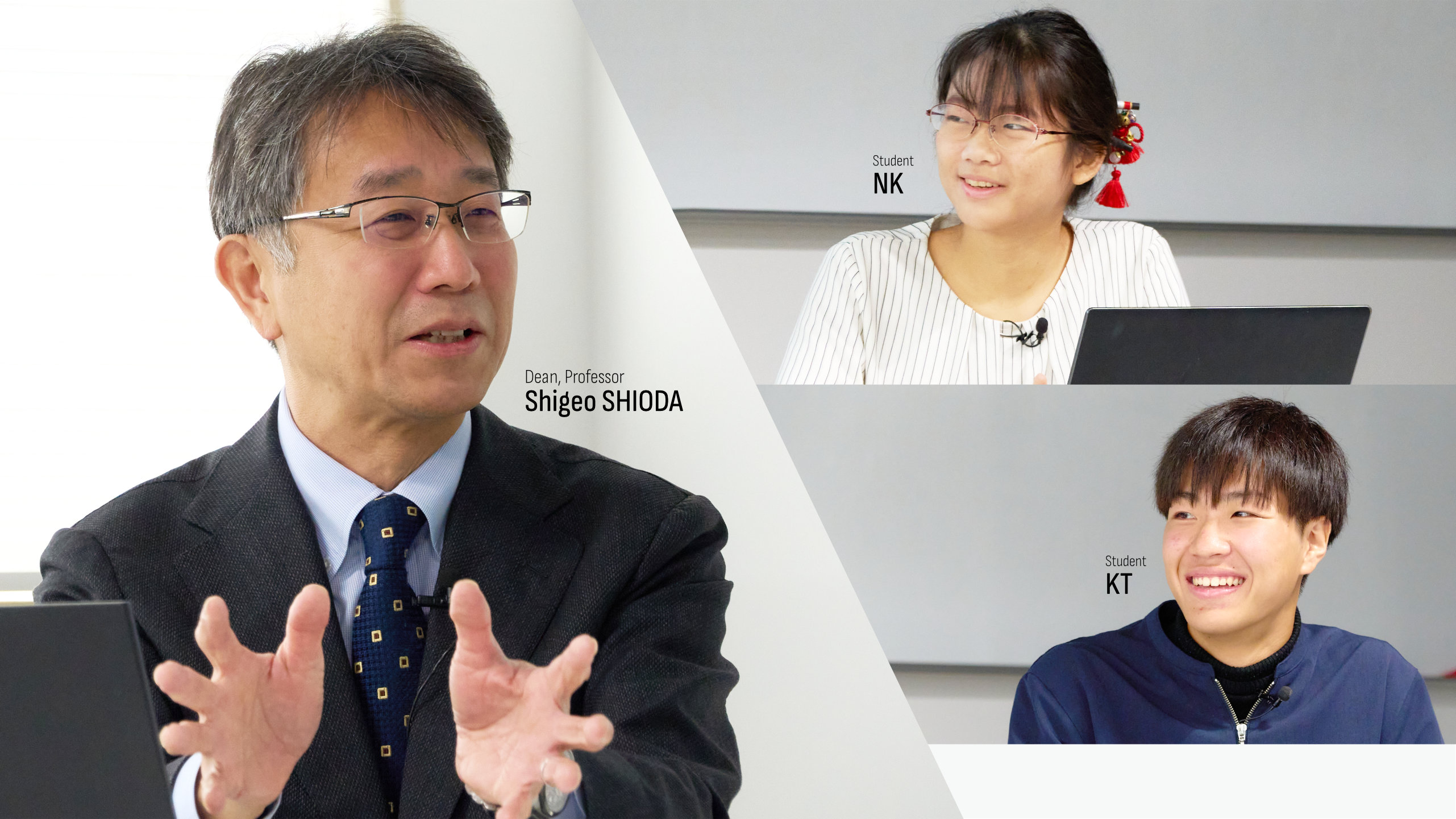
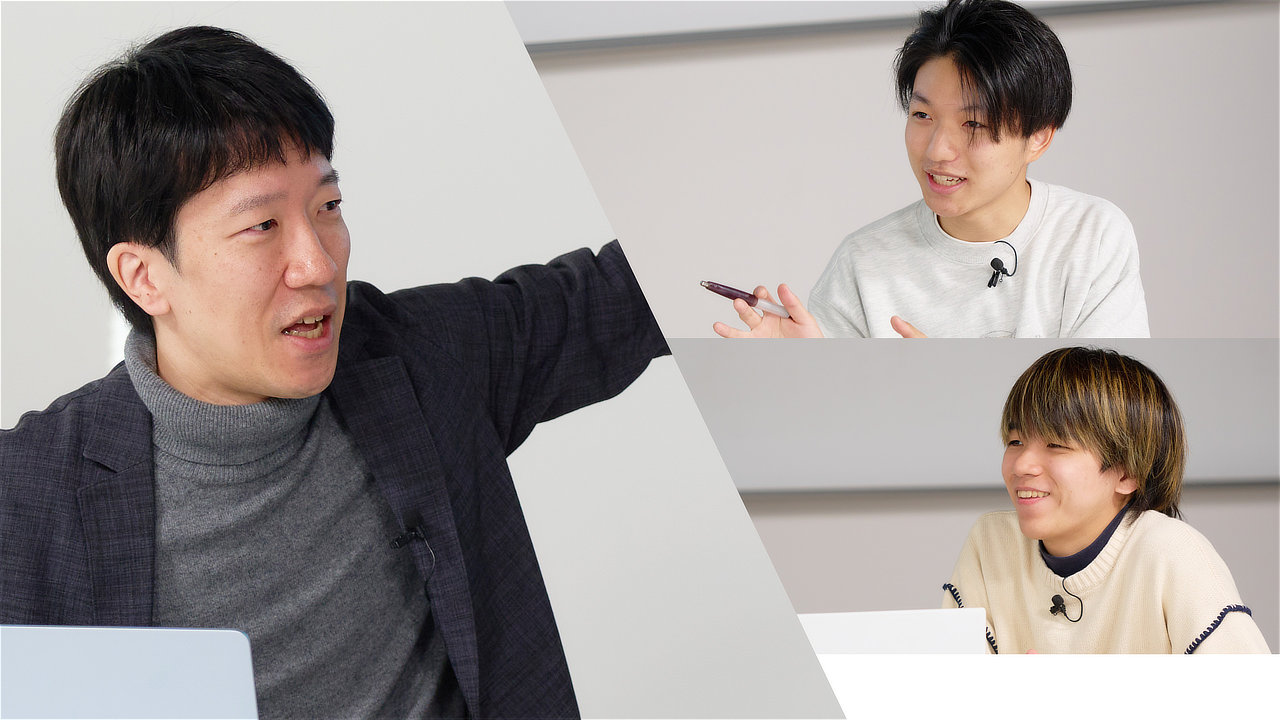
Students+Dean Shigeo SHIODA
Seizing Opportunities in the AI Era
— Expanding Futures Through Informatics and Data Science
SHIODA
“Learning AI also means understanding humans and society more deeply. AI is not yet in its final form. I hope you will expand its possibilities with your own hands.”Student NK
“AI is very smart, but it also makes mistakes. I want to think about what matters when we live alongside such a presence.”Student KT
“AI is evolving rapidly. How should we face a society that is changing so dramatically?”
Generative AI Has Arrived!
QNK: Generative AI has suddenly entered everyday life. How will society change from here?
ASHIODA: The fact that anyone can casually use AI today is a major surprise even for our generation. AI research has existed for a long time, but I never imagined it would become this practical within my lifetime. The 2024 Nobel Prize in Physics awarded to work that helped establish the foundations of machine learning using artificial neural networks (especially deep learning) also symbolizes that we have reached a major turning point.
Today’s generative AI is supported by surrounding technologies such as information networks, cloud services, and high-performance supercomputers. However, enormous amounts of energy are consumed behind the scenes. Considering this inefficiency, AI is clearly not yet in its final form. I believe it is important to engage with AI while thinking carefully about our relationship with it and about sustainability.
Does AI Make Mistakes?
QKT: I’ve heard people say “AI makes mistakes.” How should we deal with that?
ASHIODA: AI is often described as a “huge black box.” Even if the algorithms are simple in principle, there are cases where humans cannot explain why the system arrived at a particular answer. That means AI can sometimes produce unexpected errors. We need to interact with AI on the assumption that this can happen.
Our generation grew up reading books and training ourselves to think through problems, so we may be more likely to notice when something feels “off.” I do worry whether generations raised surrounded by generative AI will notice the same way. That said, even I sometimes miss mistakes. In daily use, I try to keep a balance like “70% AI, 30% my own thinking.” Even that alone greatly improves efficiency. I think that kind of stance is helpful.
Information Engineering and Data Science Are Two Wheels of the Same Vehicle
QNK: We are in the Faculty of Informatics. As AI becomes smarter, what and how should we learn?
ASHIODA: In this faculty, we look at learning and research through two perspectives: a SEEDS-oriented approach and a NEEDS-oriented approach. SEEDS-oriented research creates new technologies themselves—for example, “Intelligent IoT Networks” that enable advanced processing without relying on large computers (Prof. Hiroo Sekiya), or “Computer Vision” that extracts information from images (Assoc. Prof. Hiroyuki Kubo).
The NEEDS-oriented approach focuses on how to use existing technologies to solve real societal challenges. Examples include “environmental prediction science” aimed at eliminating disaster damage from extreme weather (Prof. Shunji Kotsuki), and research that uses human data to extend healthy life expectancy (Prof. Ryoko Katagiri).
In terms of learning, students build solid foundations in both information engineering and data science, and then go deeper into how AI works through subjects such as machine learning, deep learning, and image processing. It is important to understand both SEEDS and NEEDS—not just one. Students choose their research direction in the third year, so until then I hope you will study broadly and experience both perspectives.
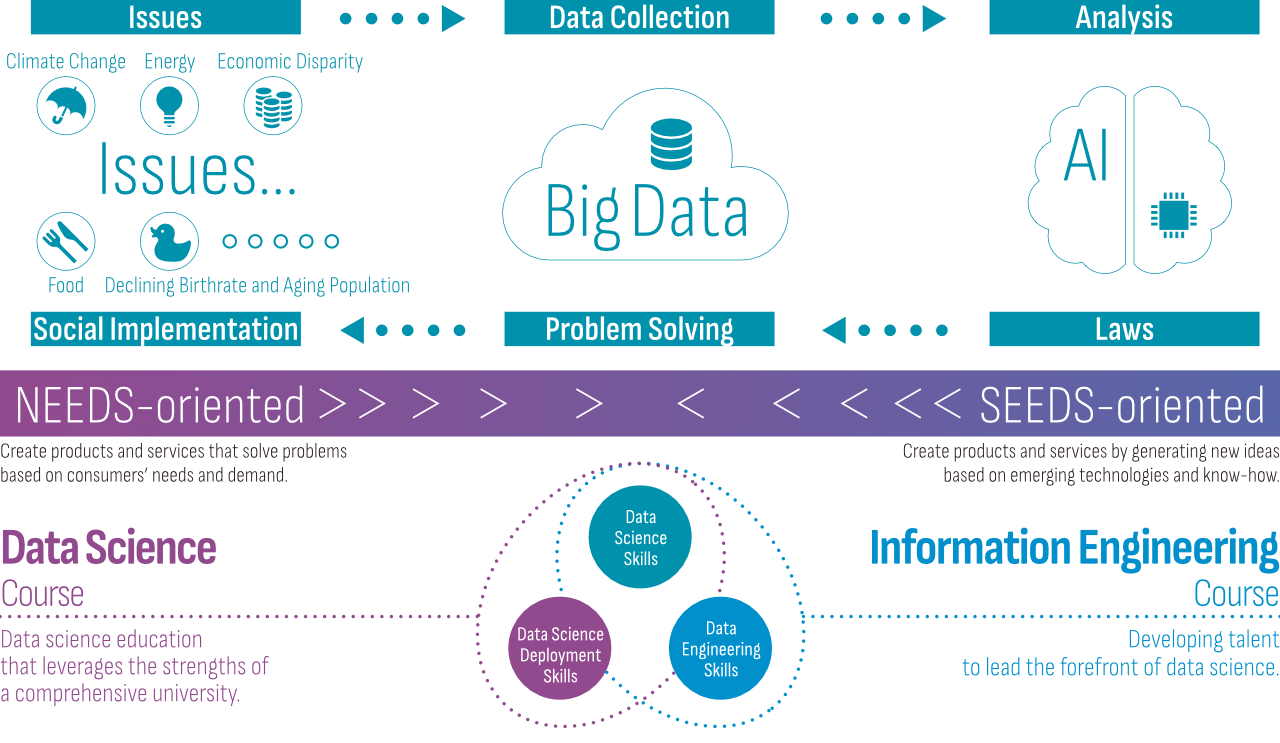
Data science is the discipline of using computers to analyze vast amounts of data to uncover patterns and principles behind natural phenomena and social activity—and to apply those insights to solving problems. As AI continues to advance, the role of data scientists is becoming increasingly important.
For details about each of the research...
Research ThemesTaking on Societal Challenges with AI
QKT: What kind of viewpoint is needed to create a better society through AI?
ASHIODA: AI becomes valuable when it connects to real issues in society—healthcare, manufacturing, security, and more. That requires not only understanding technology, but also reading how society works and what it truly needs. Overseas, young researchers and engineers are already building new social systems through AI-based medical diagnosis, autonomous driving, and climate-related forecasting technologies.
Because Chiba University is a comprehensive university, you have many opportunities to encounter knowledge from other fields. Our liberal arts and general education curriculum is also substantial. Being exposed to diverse values and ways of thinking becomes a major asset when you consider how AI should be used and implemented in society. With a broad base of knowledge and perspective—not only technical skills—you can become someone who creates new solutions in the AI era.
The Opportunities Right in Front of Us
QNK: In the AI era, what opportunities do we have?
ASHIODA: I believe this is truly an era of major opportunity. In some ways, it reminds me of the early 1990s, when mobile phones and the internet spread rapidly and the air was filled with a sense that society would change. It’s difficult to predict exactly what will happen, but that also means we are in a time when many people are starting from a similar line.
In AI, the U.S. and China are often said to be ahead. Still, Japan has unique strengths. The fact that so many tourists visit Japan shows the appeal of our nature, food culture, and the richness of Japanese culture—including anime. The sensitivity and attentiveness cultivated in everyday life are also qualities Japan can be proud of.
In the past, Japan adopted industrial technologies from the West, improved them, and grew to the point where automobiles and home electronics became globally dominant. Improving imported technologies and refining them into something better has traditionally been a Japanese strength. I believe AI can follow a similar path: with Japanese perspectives and ingenuity, we can create new value and potentially lead globally. To seize that opportunity, I hope you will develop the ability to identify where society’s challenges are and what people truly need.
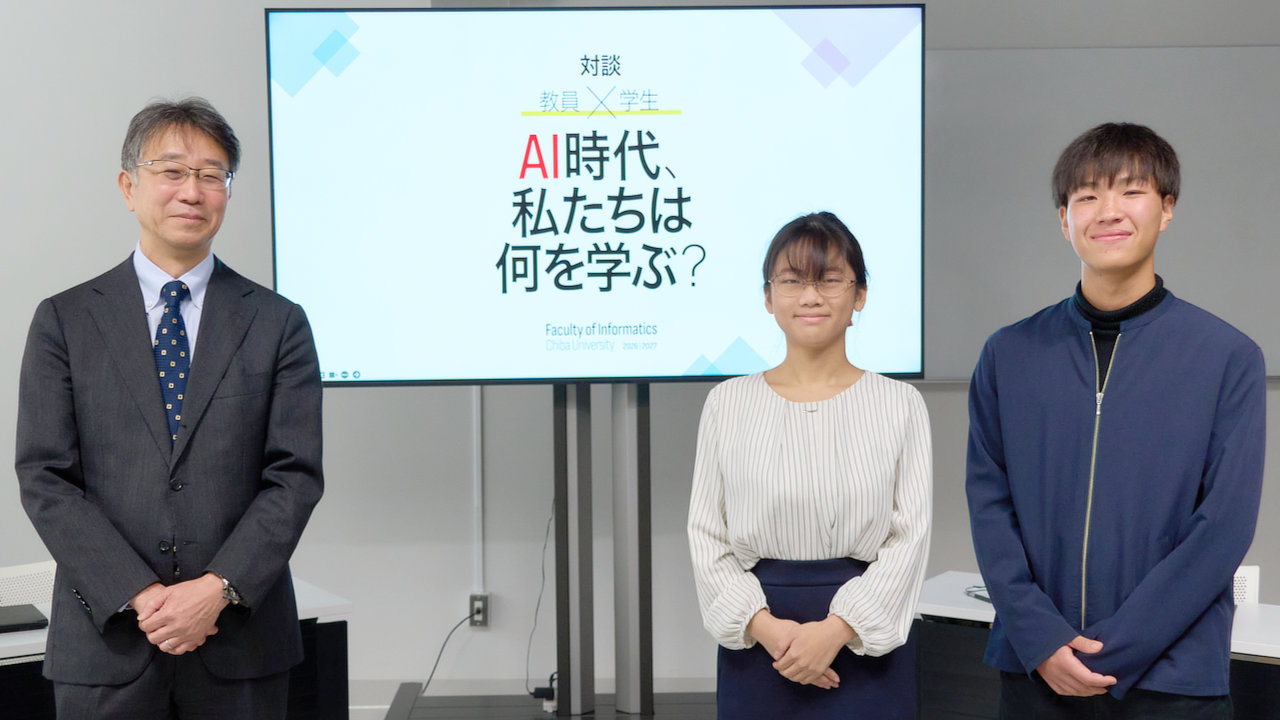
After the Dialogue
Creating the People Who Will Build a New Future
SHIODA: We are now in the middle of a major period of transformation. Generative AI will be a driving force, and it will undoubtedly change the shape of society from here. Standing at the entrance to this new era, you can challenge yourselves—whether to create technology or to create new value—starting from the same line as everyone else. I hope you will break through Japan’s sense of stagnation and become the people who build a new future. All of us on the faculty sincerely look forward to your challenges.
Make AI a “Reliable Partner”!
NK: I realized again that AI can become a “reliable partner”—someone you can consult easily about learning or everyday worries. At the same time, I also felt, through the professor’s words, that there are insights you can gain only by talking with a real person. In the future, I want to take on the challenge of building things in fields like VR and large-scale platforms—creating technologies that support communication and help people with their difficulties.
Using the Strengths of Both Humans and AI
KT: I became interested in informatics after spending part of my childhood near Silicon Valley. I entered Chiba University because I wanted to challenge myself to build platforms using VR. Today’s discussion helped me notice a difference: humans have “depth” based on lived experience, while AI has “breadth” that can present information widely and quickly. From now on, I want to understand the value of both, learn technologies that excite me, and shape content and services that many people can enjoy.
Dean, Professor
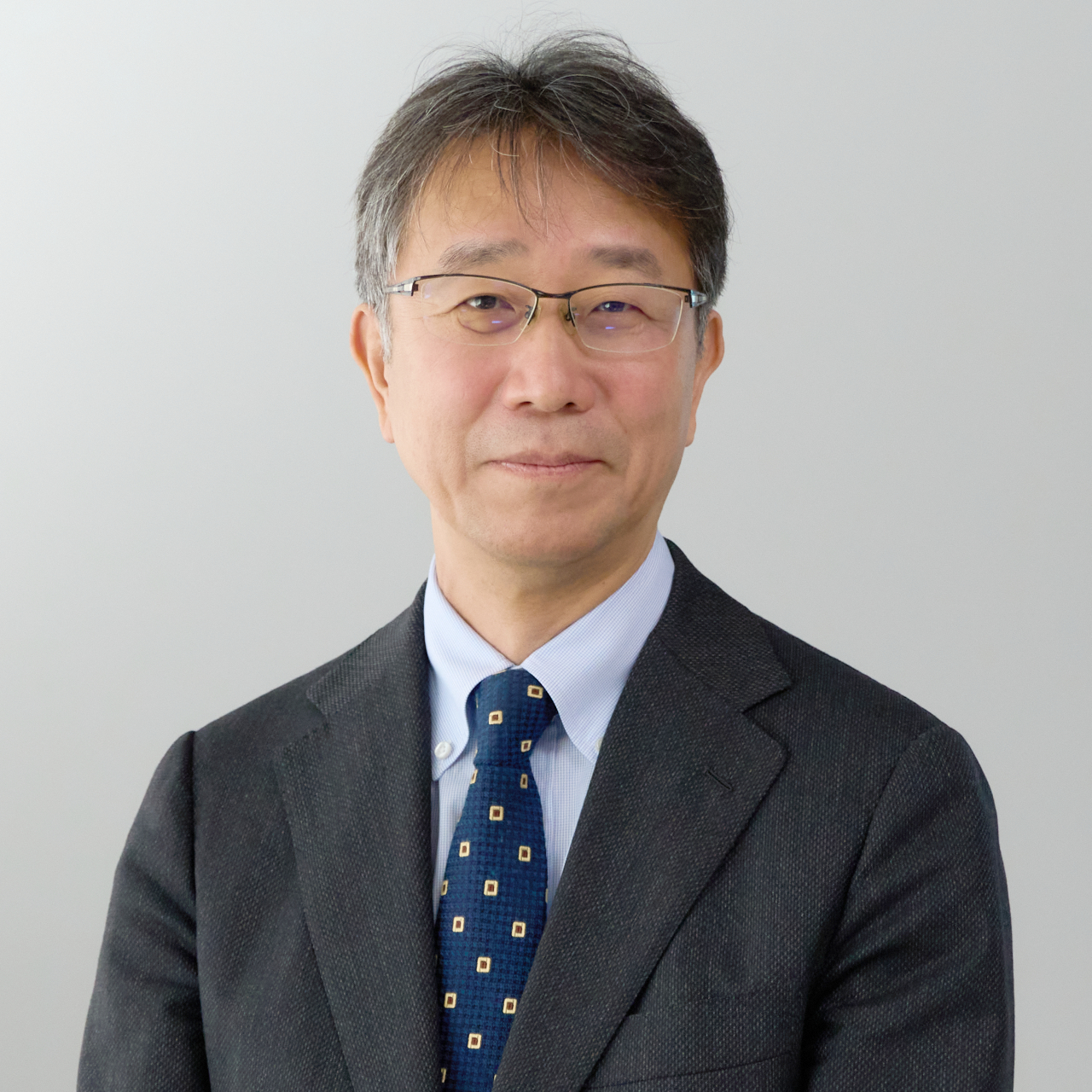
Professor Shigeo SHIODA
Dean of the Faculty of Informatics, Chiba University
Graduated from the Department of Physics, School of Science and Engineering, Waseda University in 1986, and completed the M.S. program in Department of Physics, Graduate School of Science, The University of Tokyo in 1988. After serving as a senior researcher at NTT Service Integration Laboratories, he joined Chiba University as an Associate Professor in March 2001 and became a Professor in April 2008. He has held a number of leadership positions, including Chair of the Department of Urban Environment Systems, Faculty of Engineering, and Vice Dean of the Graduate School of Engineering. He has been serving in his current post since 2024. Ph.D. (Engineering).
Student
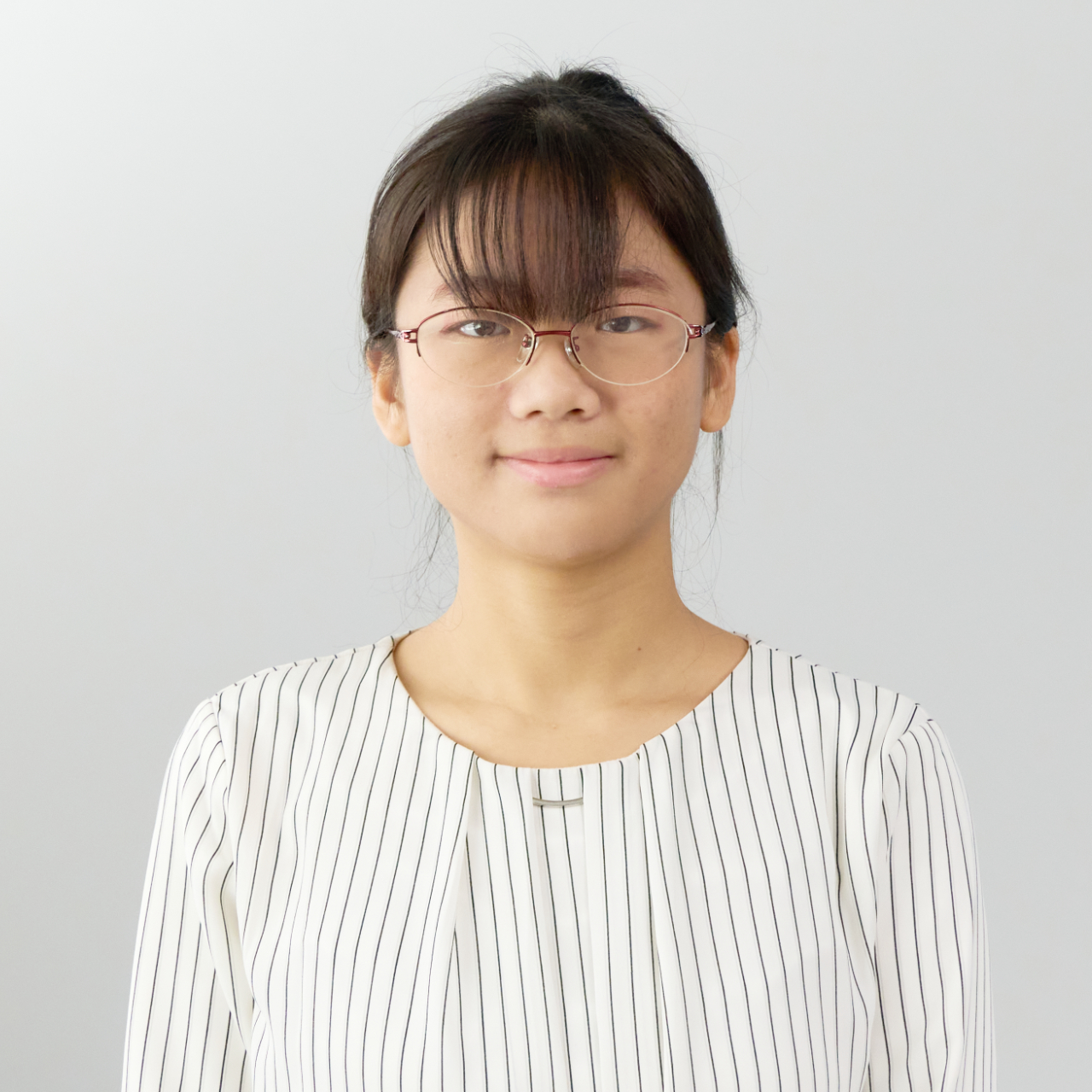
Student
NK
High School: Ochanomizu University High School (Tokyo)
Coming from an all-girls junior and senior high school, meeting students from across Japan has been refreshing. I also enjoy taking courses outside my main field, and I’m looking forward to the required study abroad program.
Student
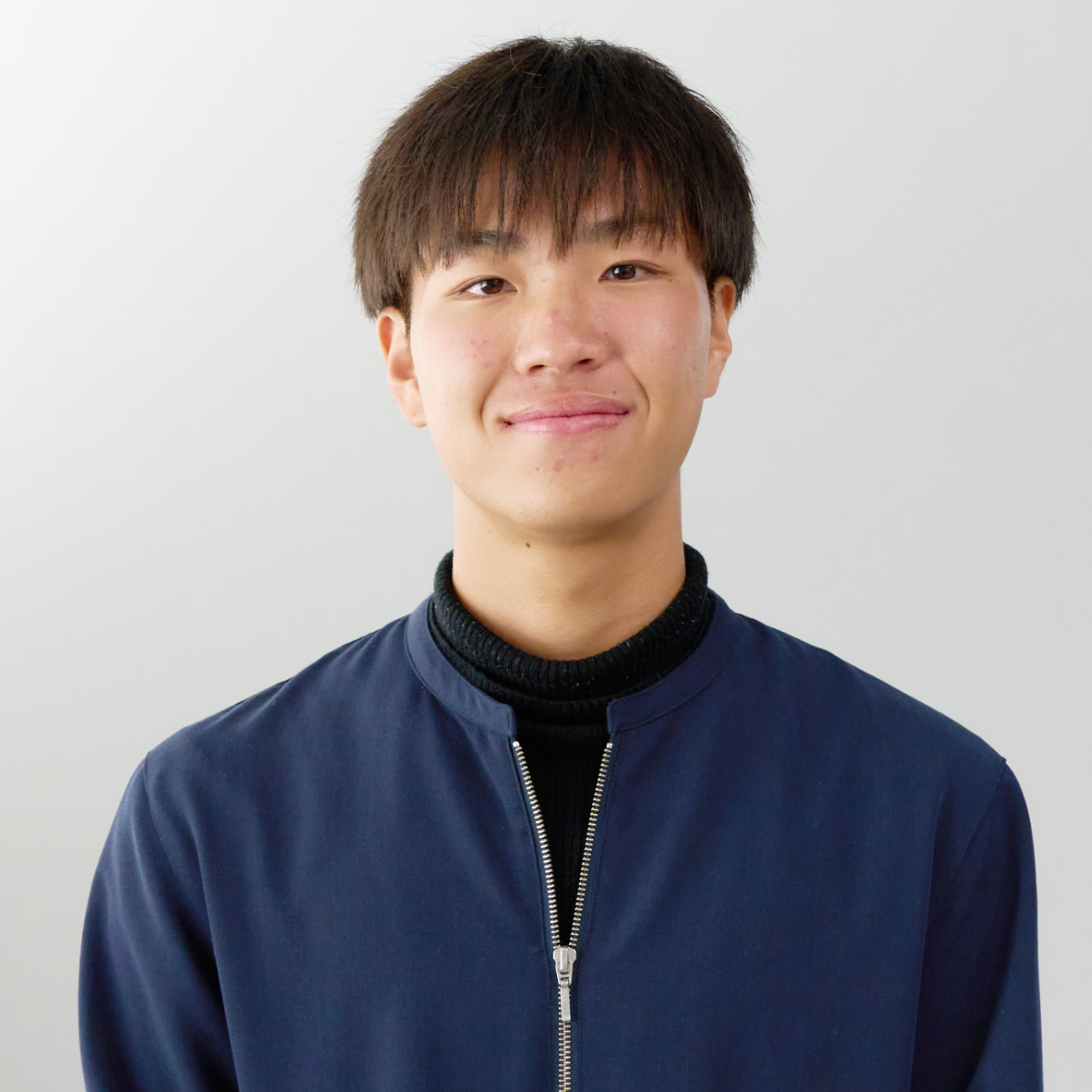
Student
KT
High School: Toho University Toho High School (Chiba)
I’d like to create a global platform where people can share VR experiences without being judged or stereotyped for what they love.

View Another Dialogue
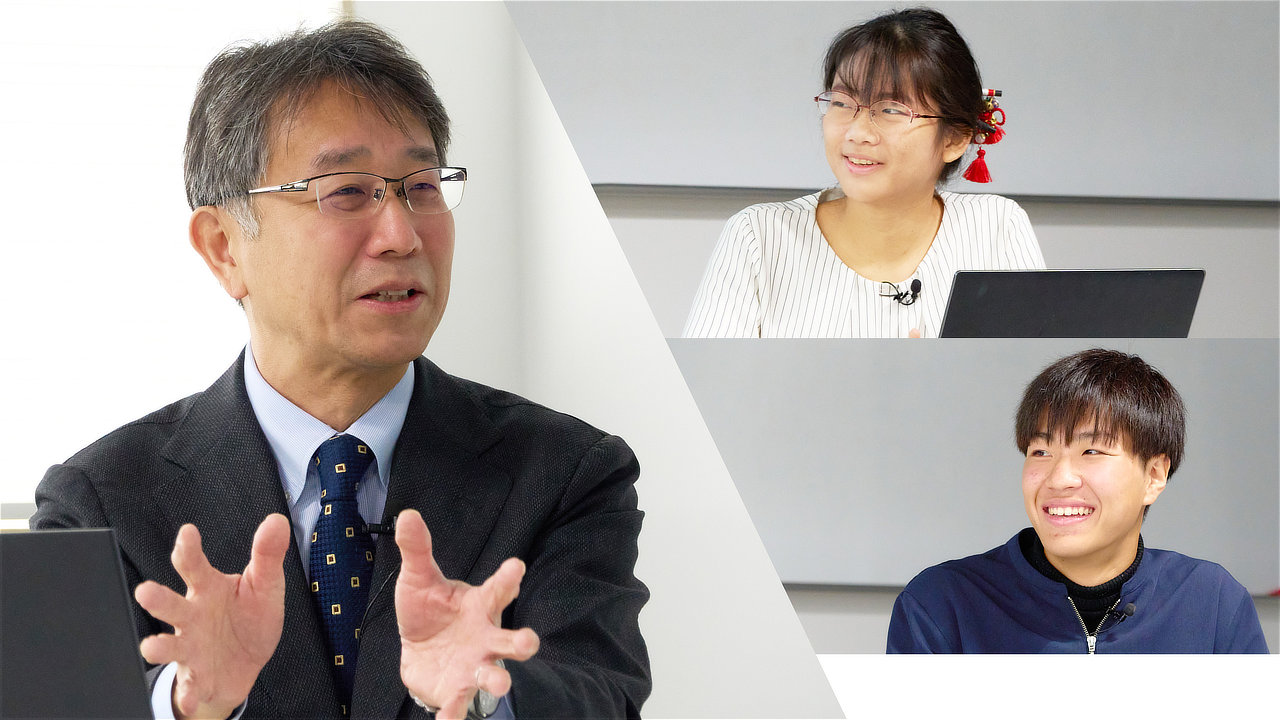
Seizing Opportunities in the AI Era
— Expanding Futures through Information Engineering and Data ScienceStudents╳Dean Shigeo SHIODA
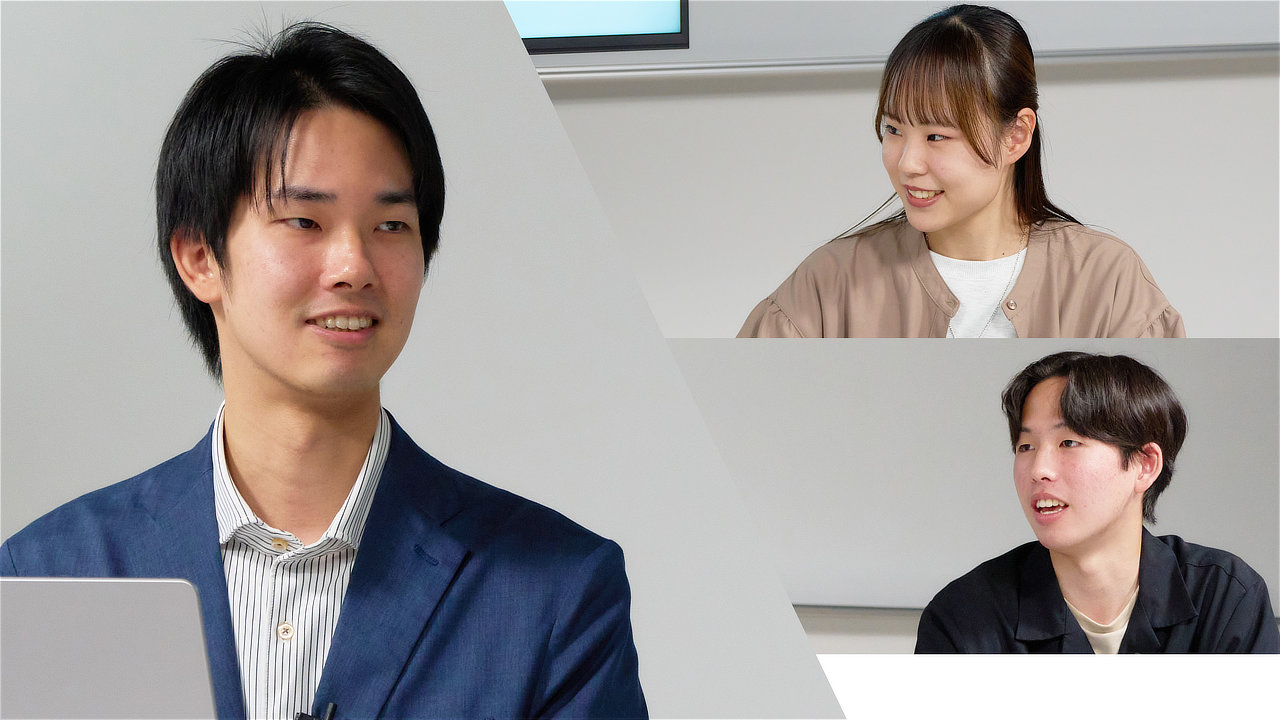
How Is the World Humans See Different from the World AI Sees?
— Thinking Skills Open the FutureStudents╳Assoc. Prof. Hiroshi KERA
Expanding the Possibilities of AI Through “Visualization”
— Thinking Skills Open the FutureStudents╳Assoc. Prof. Hiroyuki KUBO