Two Courses
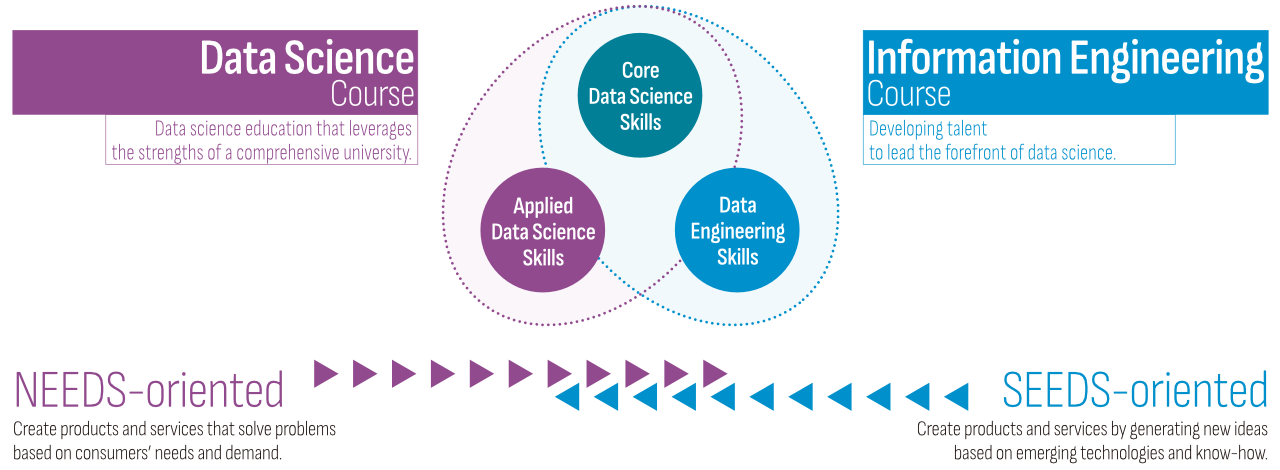
When tackling real-world issues with data science, two perspectives are important: developing technologies and applying them to social needs. In the Faculty of Informatics, students choose one of the following two courses when advancing to the third year.
Data Science Course
We develop practical data science professionals who can contribute to solving social issues, combining strong foundations with hands-on skills.
Students focus on developing core data science skills and applied data science skills.
Leveraging Chiba University’s strengths as a comprehensive university, the course offers a wide range of specialized subjects across three application areas—Medicine & Nursing, Environment & Horticulture, and Human & Affective Sciences—and provides practical training and exercises to build implementation and deployment capability.
Information Engineering Course
We educate students to work at the forefront of data science research by learning the theory and practice of data science as well as the information engineering technologies that support it.
Students focus on developing data engineering skills and core data science skills.
Through advanced subjects that explore the essence of data science and its surrounding technologies in depth, students build the ability to drive innovation in data science.
Curriculum
The curriculum is structured around three layers:
•General Education Subjects (university-wide): building broad academic foundations
•Basic Specialized Subjects: essential foundations for data science and information engineering
•Specialized Subjects: developing higher-level knowledge and expertise in information engineering and data science.
Through these, students develop three integrated skills: Core Data Science Skills, Data Engineering Skills, and Applied Data Science Skills.
Graduation Requirements and Degree
- Credits required for graduation: 130 credits.
- At least one overseas study-abroad experience is required during enrollment.
- Annual registration limit: 45 credits per year.
Course Selection
When students advance to the third year, they choose either the Data Science Course or the Information Engineering Course. Whichever course students select, they can take subjects across both information engineering and data science fields.
Six-Term System
The academic year is divided into six terms. Each term is approximately eight weeks, making it easier to secure time for study abroad, internships, volunteering, and other social experiences.
Regional Development Subject Group (Sports and Health Subjects / Regional Studies Subjects)
Academic Development Subject Group (Liberal Arts Core Subjects / Liberal Arts Extension Subjects / Mathematics and Data Science Subjects)
Environment & Horticulture (IoT and Environmental Sensing / Remote Sensing Technology / Data Assimilation / Geospatial and Environmental Informatics / Geographical Information Science for Rural Planning)
Human & Affective Sciences (Color Science / Digital Image Processing / Visual Information Processing / Human Interface / Computer Graphics / Biomedical Informatics Engineering / Methods for Sensation and Perception Measurement / Design Thinking)
Project-based Research (Data Science)
Distinctive Classes
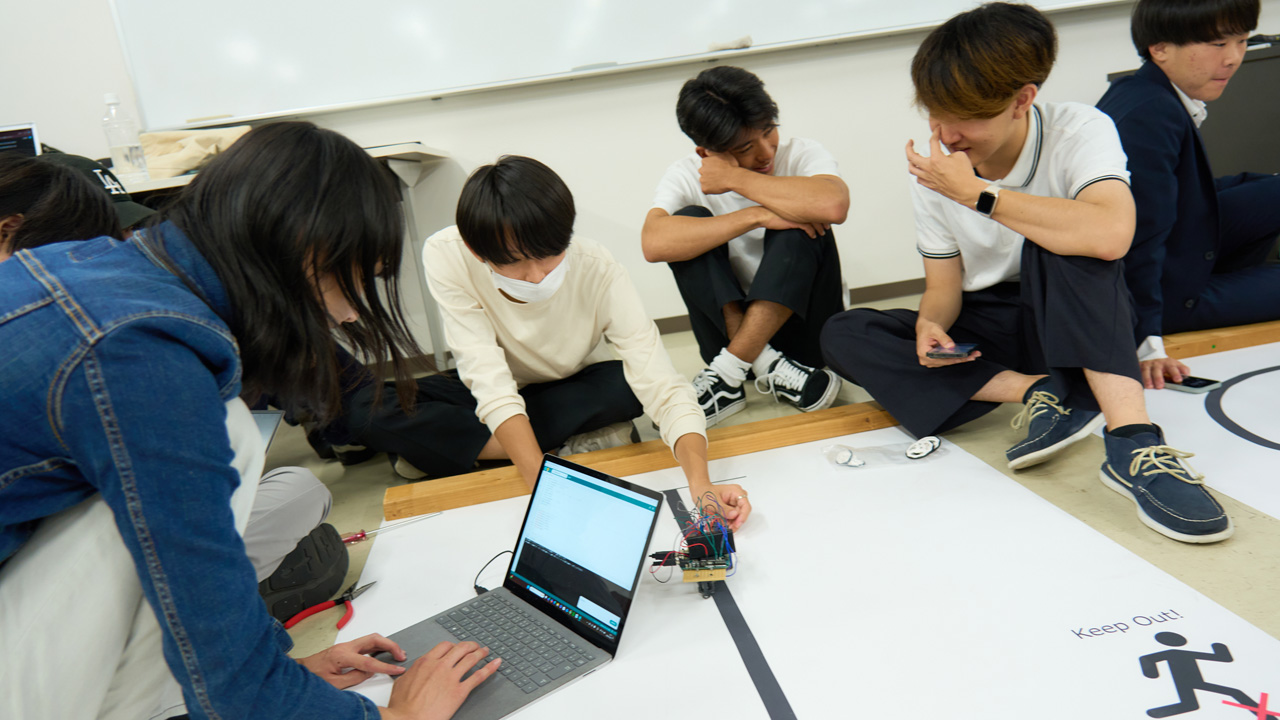
In this class, students build a line-tracing robot using a microcontroller board such as Arduino. Working in groups, they apply both hardware and software knowledge to complete the task of enabling the robot to detect and follow a path. Through the project, students develop creativity, planning skills, teamwork, and overall hands-on engineering ability.
* Photos show a class from the Department of Information Engineering, Faculty of Engineering.
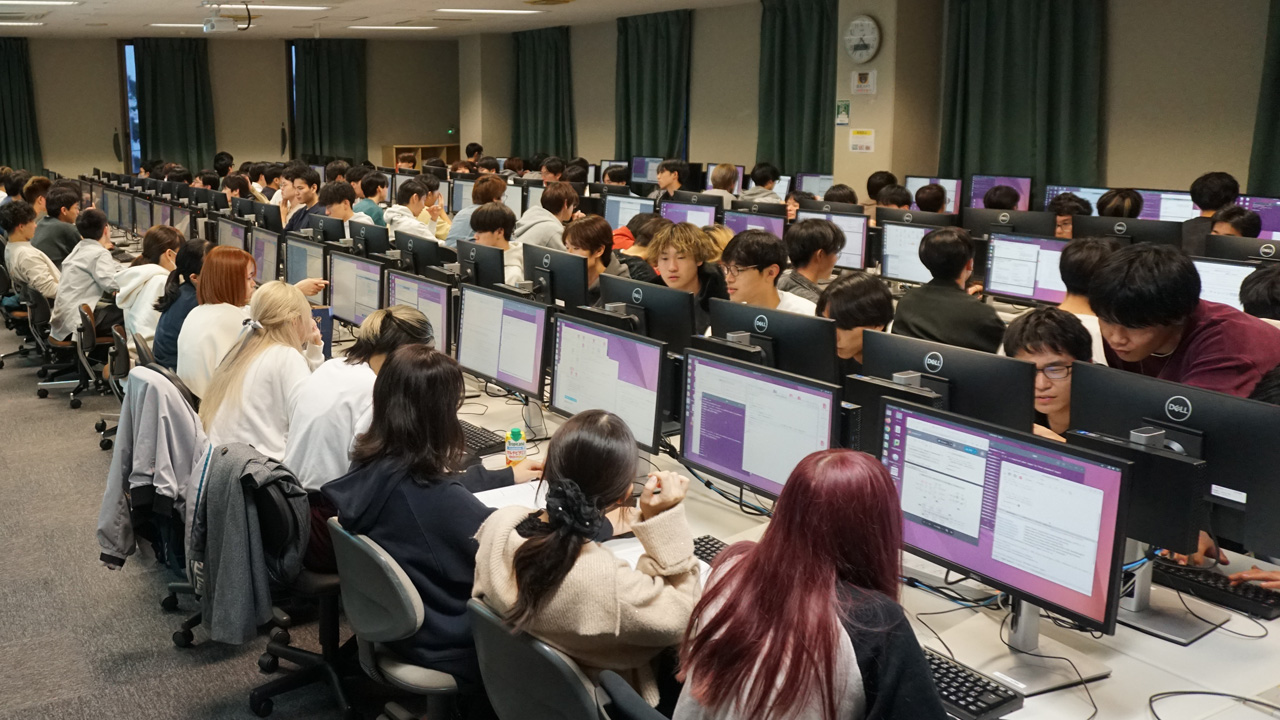
In the first year, students in both the Data Science Course and the Information Engineering Course take this common foundation subject to learn programming. Careful instruction is provided so that even beginners with no prior experience can learn with confidence and enjoy developing practical programming skills.
Students identify practical challenges on their own in specialized or applied areas of data science and information engineering—such as medicine and nursing, the environment and horticulture, design engineering, and affective engineering—and conduct research aimed at solving them. The course culminates in presentations of research outcomes. It is offered in the spring semester of the third year and serves as an introduction to the graduation research in the fourth year.
Sample Timetable (3rd Year, Spring Semester)
Data Science Course
| Mon. | Tue. | Wed. | Thu. | Fri. | |
|---|---|---|---|---|---|
| 1 | Medical Data Analysis | Machine Learning Exercises | Geographical Information Science for Rural Planning (T2) | ||
| 2 | Machine Learning I | Optimization Theory | Computer Graphics | ||
| 3 | Data Assimilation | IoT and Environmental Sensing | Methods for Sensation and Perception Measurement | ||
| 4 | Medical Statistics and Epidemiology | Numerical Computation | Multivariate Analysis | ||
| 5 | Introduction to Data Science Nursing | Human Interface |
Information Engineering Course
| Mon. | Tue. | Wed. | Thu. | Fri. | |
|---|---|---|---|---|---|
| 1 | Computer Architecture | Machine Learning Exercises | Intellectual Property Rights Seminar (Biweekly) | ||
| 2 | Machine Learning I | Optimization Theory | |||
| 3 | Information Theory | Laboratory Work in Information Engineering II | IoT and Environmental Sensing | ||
| 4 | Numerical Computation | Computer Network | Multivariate Analysis | ||
| 5 | Introduction to Information Systems | Social Innovation |
Degree and Qualifications
Degree
Bachelor of Engineering (available in both courses).
Teaching Certificate
By taking teacher-training subjects in addition to graduation requirements, students may obtain a First-Class High School Teacher’s Certificate (Information).
Internship Support
We provide internship support to help students develop their careers. Internships are offered in four types as listed below. Types 3 and 4 may be recognized for academic credit upon application.
| Type 1 | Open Company | Information sessions and events hosted by industries and companies |
|---|---|---|
| Type 2 | Career Education | Educational programs offered by the university and/or companies |
| Type 3 | General / Specialized Internship | Hands-on work experience in the workplace |
| Type 4 | Advanced Specialized Internship | Workplace experience involving tasks that require a particularly high level of expertise (e.g., job-type research internships) |
Global Education
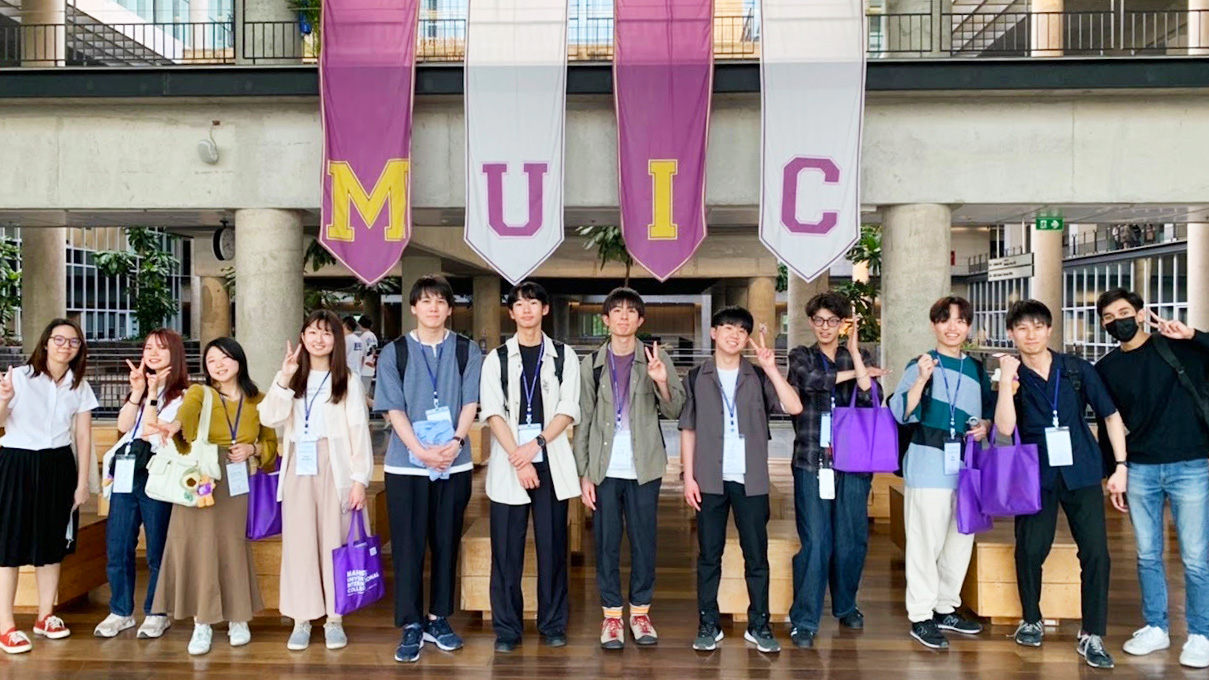
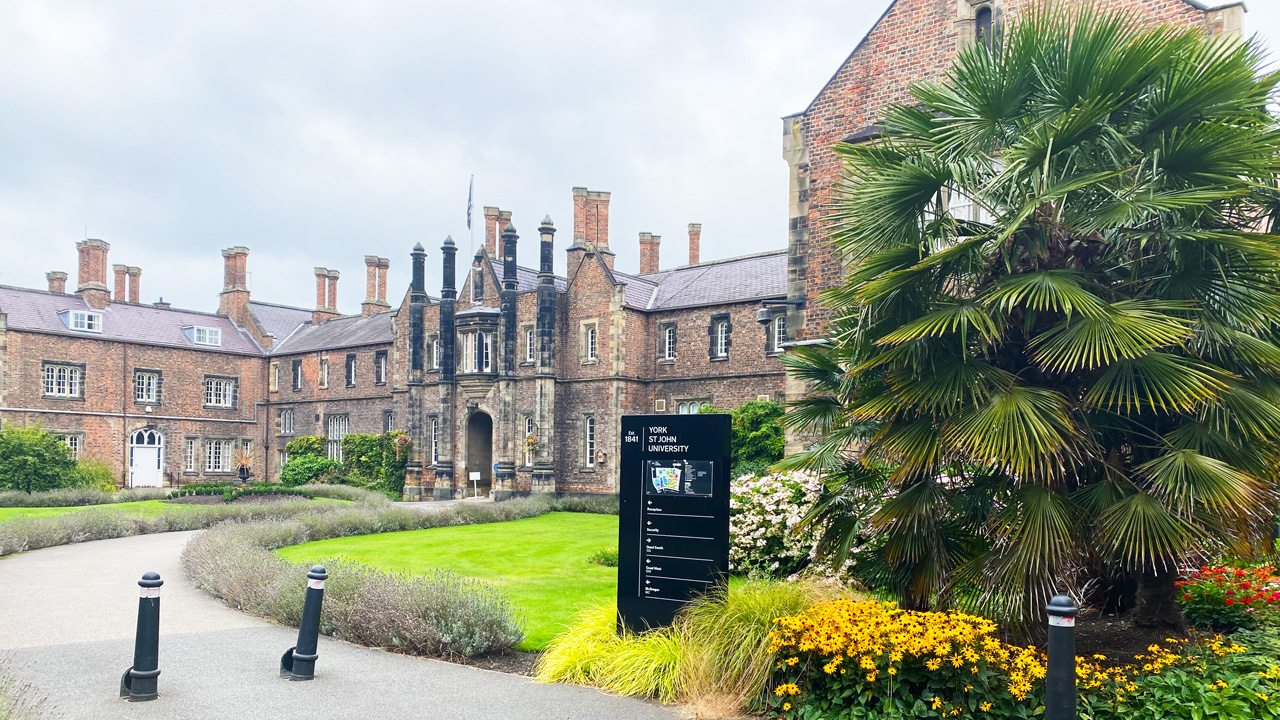
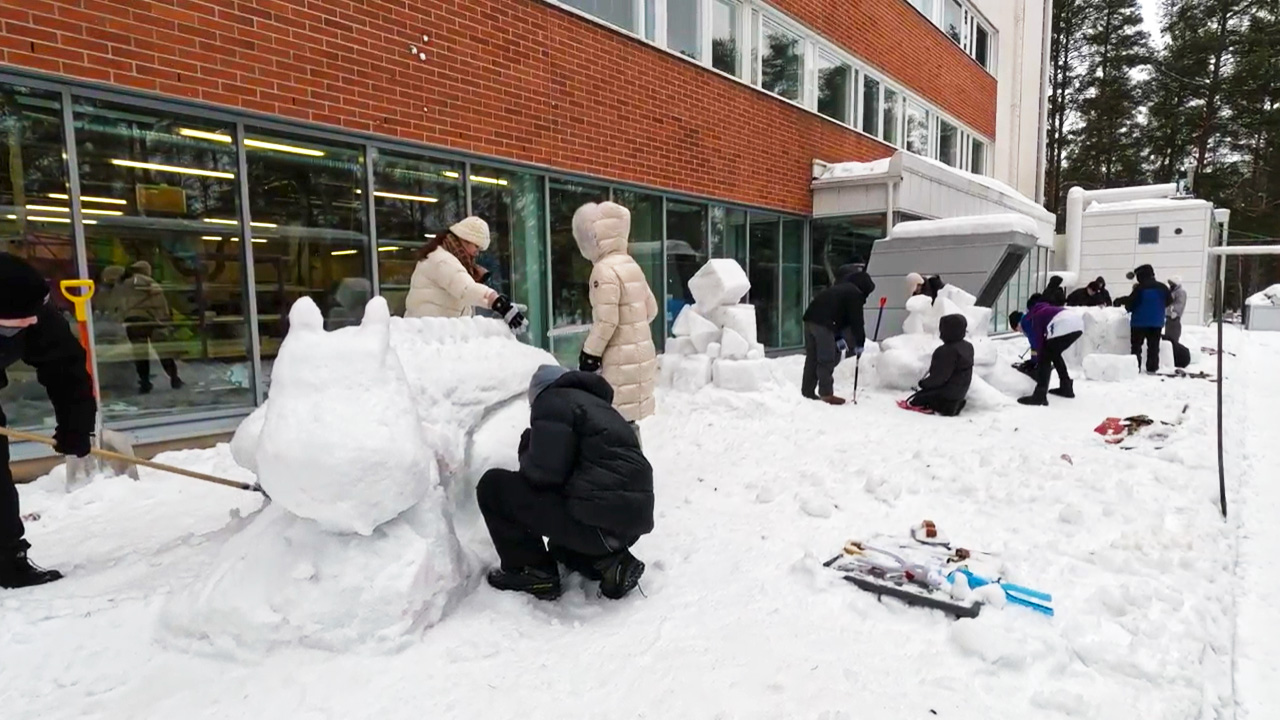
At Chiba University, study abroad is required for both undergraduate and graduate students. For students in the Faculty of Informatics, participation in an overseas study-abroad program at least once before graduation is also required, and students can choose from 80+ programs based on destination, duration, and purpose.
* Programs primarily for students in Japanese-taught degree programs.
Overseas Study Is a Required Component
In line with the policy of the Chiba University Global Program “ENGINE” (Enhanced Network for Global Innovative Education), students must complete at least one overseas study-abroad experience while enrolled. Programs are available to match students’ goals and language ability.
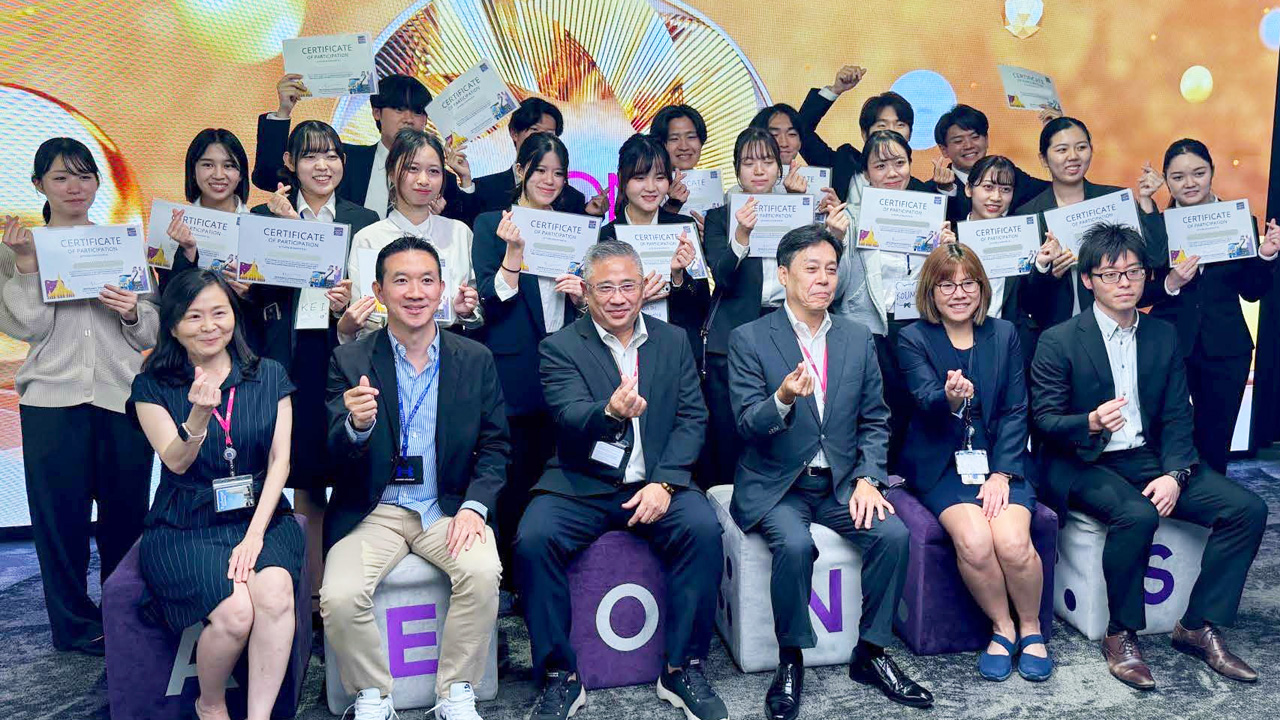
Study abroad programs that learn through practice and PBL (Project Based Learning)
- Global Volunteer
- Global Internship
Study abroad programs to learn language and culture
- Begin One’s Oversea Trial (BOOT)
- Mid-Term Language Skill Enhancement Program
- Overseas Training: English / English Culture
Study abroad programs to further develop specialization
- Chiba University Overseas Study-Abroad Program
PBL-style collaborative learning programs with partner universities
- Global Study Program (GSP)
- TWINKLE (a joint program with ASEAN partner universities)
For more details about Global Education...
Chiba University > Global InitiativesChiba University > Enhanced Network for Global Innovative Education (ENGINE)