Information Engineering and Data Science in a Data-Driven Era
In April 2024, Chiba University established the Faculty of Informatics, a new faculty integrating Information Engineering and Data Science.
As Dean of the Faculty, I would like to explain why data science is essential today, what students learn in this faculty, and how our educational framework prepares them for a data-driven society.
What Is Data Science?
Data science is a field of study that analyzes large-scale data using computational and statistical methods to identify patterns, structures, and relationships in natural and social phenomena.
In a data-driven era, large volumes of data are continuously generated from environmental observations, economic activity, healthcare systems, and digital services.
By analyzing such data systematically, data science enables accurate understanding, prediction, and optimization of complex systems.
These capabilities are essential for addressing global and societal challenges, including climate change, energy management, population aging, economic inequality, and food sustainability.

Why Is Data Science Important Today?
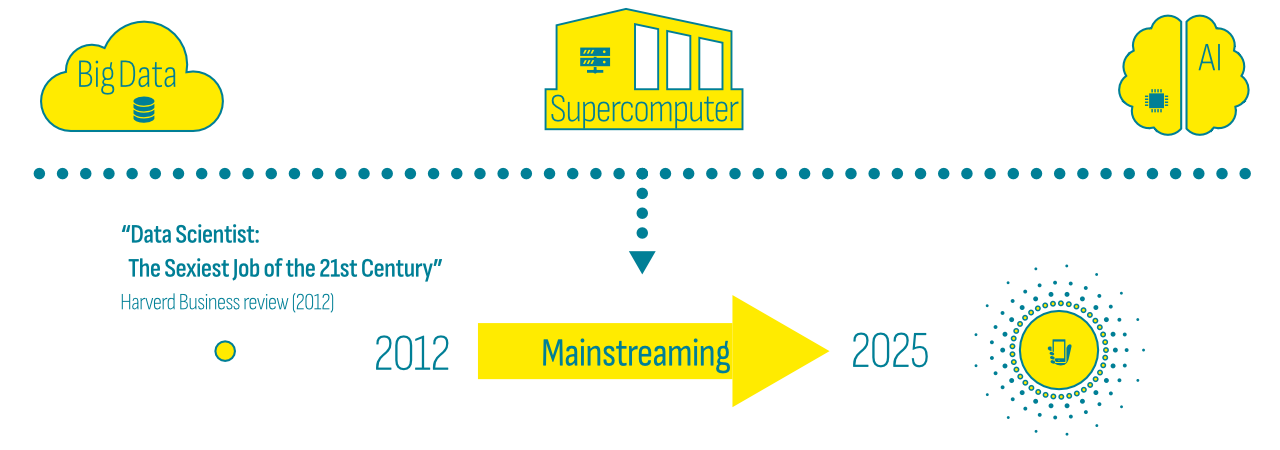
The importance of data science can be explained by four key developments.
- Availability of Large-Scale Data
Digital infrastructure, sensors, and networks now enable the continuous collection of large and diverse datasets. - High-Performance Computing
Advances in supercomputing and cloud computing make it possible to process large datasets efficiently. - Advances in Artificial Intelligence
Progress in machine learning and deep learning has significantly improved the ability to analyze complex data and extract meaningful patterns. - Practical Use Across Society
AI-based technologies are widely used in industry, public services, and everyday applications, increasing demand for data science expertise.
What Students Learn in Data Science
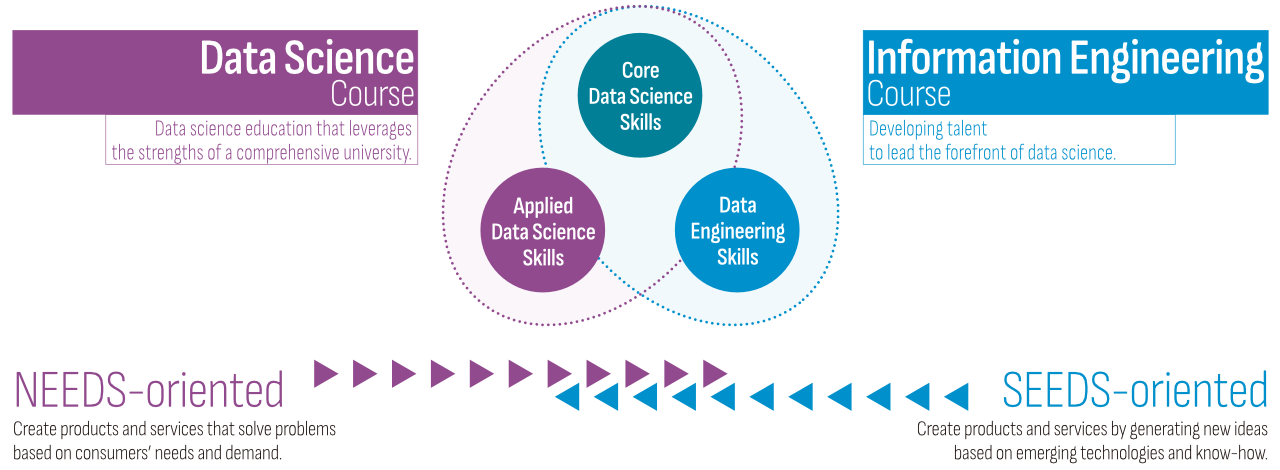
To apply data science effectively in society, three core competencies are required.
- Core Data Science Skills
The ability to analyze data using probability, statistics, machine learning, and artificial intelligence in order to identify patterns and relationships. - Data Engineering Skills
The ability to design and manage data systems, including data collection, storage, processing, and analysis, based on programming, algorithms, computer systems, and information and communication technologies. - Applied Data Science Skills
The ability to apply data science to real-world domains such as the environment, weather, healthcare, life sciences, human-centered design, and social systems, and to create practical solutions and new value.
Educational Framework of the Faculty of Informatics
The Faculty of Informatics provides an integrated education in Information Engineering and Data Science, enabling students to acquire both technical foundations and applied skills.
This integrated approach value both creating new technologies (SEEDS) and applying data science to real-world needs (NEEDS).
When advancing to the third year, students select one of the following two courses, depending on their academic orientation and interests.
Information Engineering Course
This course is designed for SEEDS-oriented students who wish to develop advanced information and computing technologies themselves.
It focuses on fundamental and advanced topics such as computer systems, algorithms, networks, and information engineering technologies that form the technical foundations of data science.
Students in this course aim to create new methods, systems, and technologies that will support future data-driven applications.
Data Science Course
This course is designed for NEEDS-oriented students who aim to apply data science to real-world problems and social challenges.
It focuses on data analysis, modeling, and application across a wide range of domains, including the environment, healthcare, social systems, and industry.
Students in this course aim to use existing data and analytical techniques to address concrete societal needs and create practical solutions.
For more details about each course...
StudyProfile
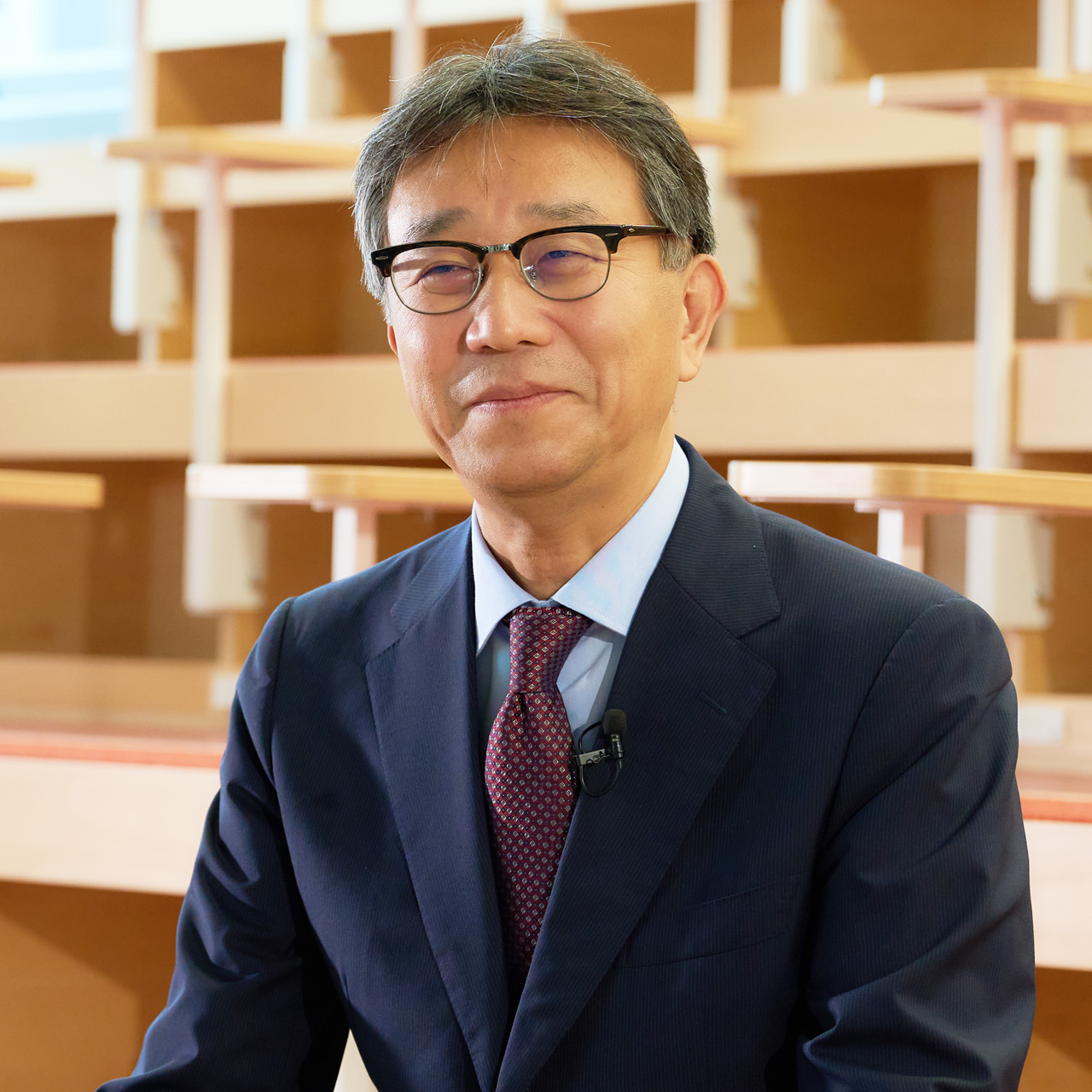
Professor Shigeo SHIODA
Dean of the Faculty of Informatics, Chiba University
Graduated from the Department of Physics, School of Science and Engineering, Waseda University in 1986, and completed the M.S. program in Department of Physics, Graduate School of Science, The University of Tokyo in 1988. After serving as a senior researcher at NTT Service Integration Laboratories, he joined Chiba University as an Associate Professor in March 2001 and became a Professor in April 2008. He has held a number of leadership positions, including Chair of the Department of Urban Environment Systems, Faculty of Engineering, and Vice Dean of the Graduate School of Engineering. He has been serving in his current post since 2024. Ph.D. (Engineering).